Introduction
Last month, Xiaomi’s spin-off brand Poco India launched its next smartphone dubbed Poco X2 in the Indian market. For those who’re unaware, the company is very well known for its affordable debut Poco F1 smartphone.
The Poco F1 was built on the foundation of offering a high-end performance-driven device at a value for money price. The foremost question that emerges is the fact that whether the all-new Poco X2 follows the same ideology or not. Well, we have been using the device for a good amount of time now to answer these questions for you.
Also Read: Best smartphones under 20000
Price in India, Variants, Availability
Before talking about the device in-depth, let us first take a look at the variants as well as the pricing of the phone. Poco X2 comes in three different storage options – 6GB+64GB, 6GB+128GB and 8GB+256GB variants. The base variant comes with a price tag of INR 15,999 while the top-end model will set you back around INR 19,999. The 128GB storage option, on the other hand, is priced at INR 16,999.
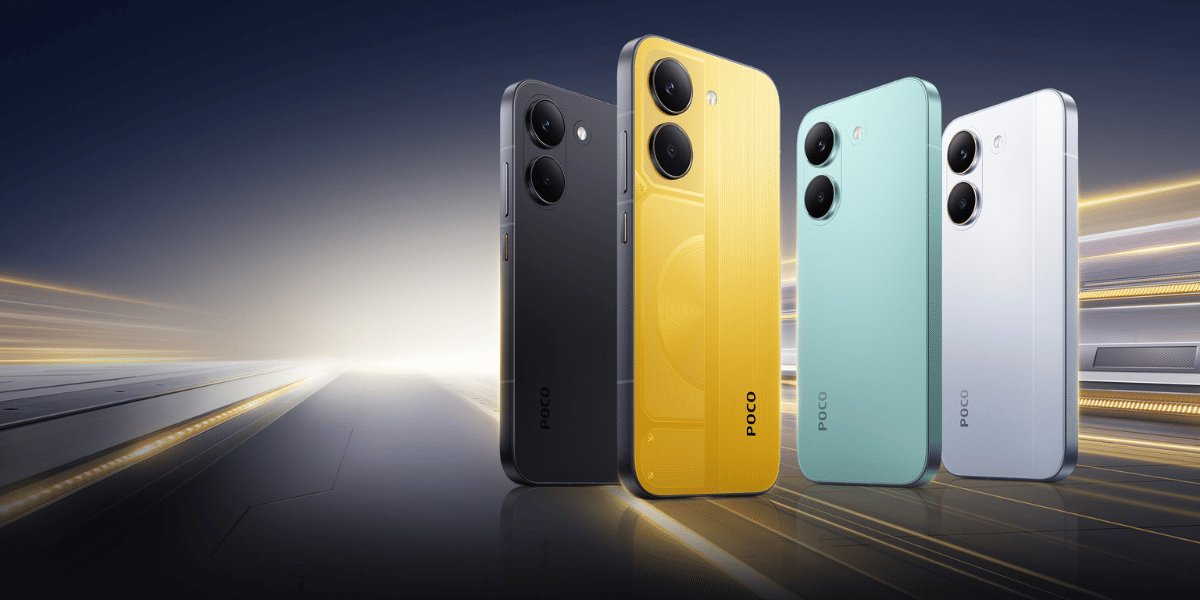
In terms of colour options, the phone is available in Atlantis Blue, Matrix Purple, and Phoenix Red options. Interested buyers can get the device exclusively from Flipkart India. At the time of writing this, the company is offering an instant discount of INR 1,000 when the transaction is done by ICICI credit cards.
Box Contents
Poco X2 comes packed in a black premium looking box with logo and model branding on the front view. Just to mention, the device falls under the Made in India campaign as you can see from the back of the device. Sliding the cover of the box, we come across a rectangular section that consists of a user manual guide, soft transparent case, and SIM ejector tool.
Underneath the section, you will see the device itself covered in a protective layer laying there nicely. Keeping the phone aside for a while, let’s see what else is present inside the box. There is a big heavy fast charger that comes with 27W charging technology. Alongside this, you will see the USB Type-C cable for charging.
Here is a quick overview of what you’ll be getting inside the box:
- Poco X2, the device itself
- 27W Fast charging adapter
- USB Type-C cable
- Soft TPU case
- SIM ejector pin
- Manuals and other documentation
Specs at a Glance
Talking about the key on-paper specifications of the all-new Poco X2 smartphone, here is what the device packs under the hood.
- Display: 6.67-inch IPS LCD panel, 1080 x 2400 pixels, 395 PPI, 120Hz
- Processor and GPU: Snapdragon 730G (8nm), Adreno 618 GPU
- RAM & ROM: up to 8GB, up to 256GB options
- Software: Android 10 OS, MIUI 11
- Rear cameras: Quad module, 64MP+8MP+2MP+2MP
- Selfie sensor: Dual module, 20MP+2MP
- Battery: 4500mAh capacity, 27W fast charging
- Weight: 208g
- Dimensions: 165.3 x 76.6 x 8.8 mm
- Price in India: starts from INR 15,999
With key specifications cleared out of the way, let’s see how the device performs in real-life usage scenarios.
Design & Build
Let’s start this review off by addressing that Poco X2 looks exactly like the Redmi K30 device in China. In fact, Poco has made the device in collaboration with its primary brand i.e. Xiaomi. Unlike the Poco F1 which came with the simple not-so premium design, the X2 does offer an improvement in that aspect. We’re looking at a modern-design smartphone that comes with a high-gloss finish on the rear side.
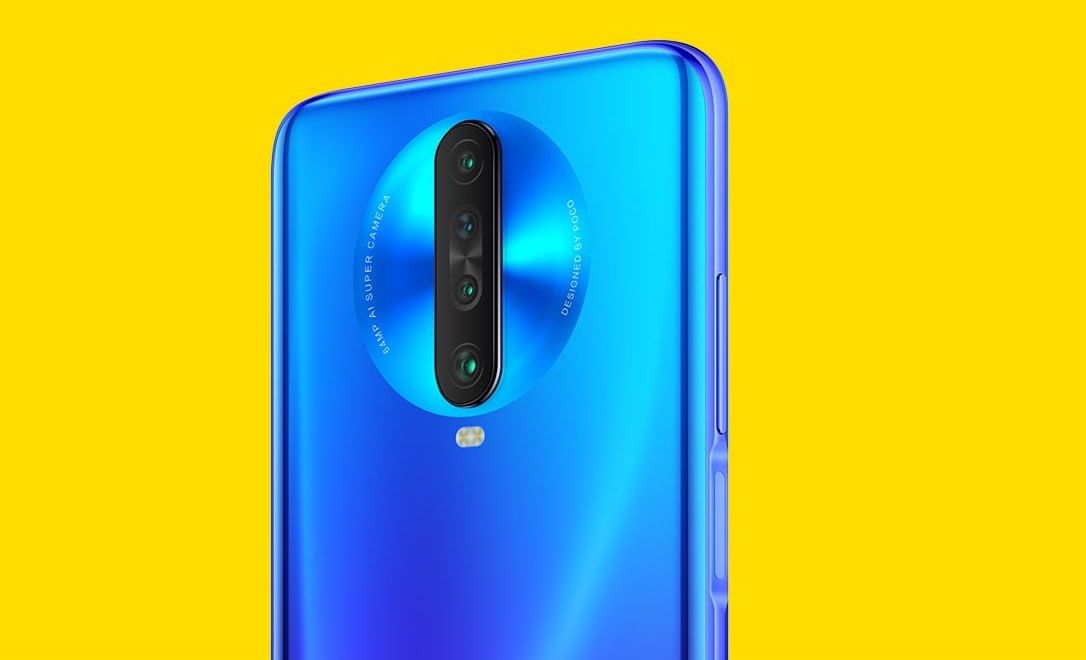
Looking at the camera module at the back, you can easily conclude that the device takes inspiration from Huawei Mate 30 Pro. The difference here is that the circular element is a part of the Gorilla Glass 5 glass. You can also see ring patterns in the camera module that looks quite pleasing. With that said, the cameras are arranged vertically accompanied by an LED flash. Even the branding on the back is quite minimal with simple POCO written on the bottom.
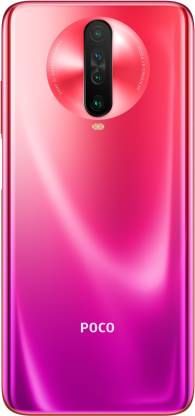
Since the front and the back are covered with the Corning Gorilla Glass 5 glass protection, the device is quite slippery. You might want to throw that free soft transparent case to fix that. With that said, the back of the device doesn’t attract that much of the fingerprint smudges. If it does, you can just simply wipe the back off to get back the clean glossy appearance.
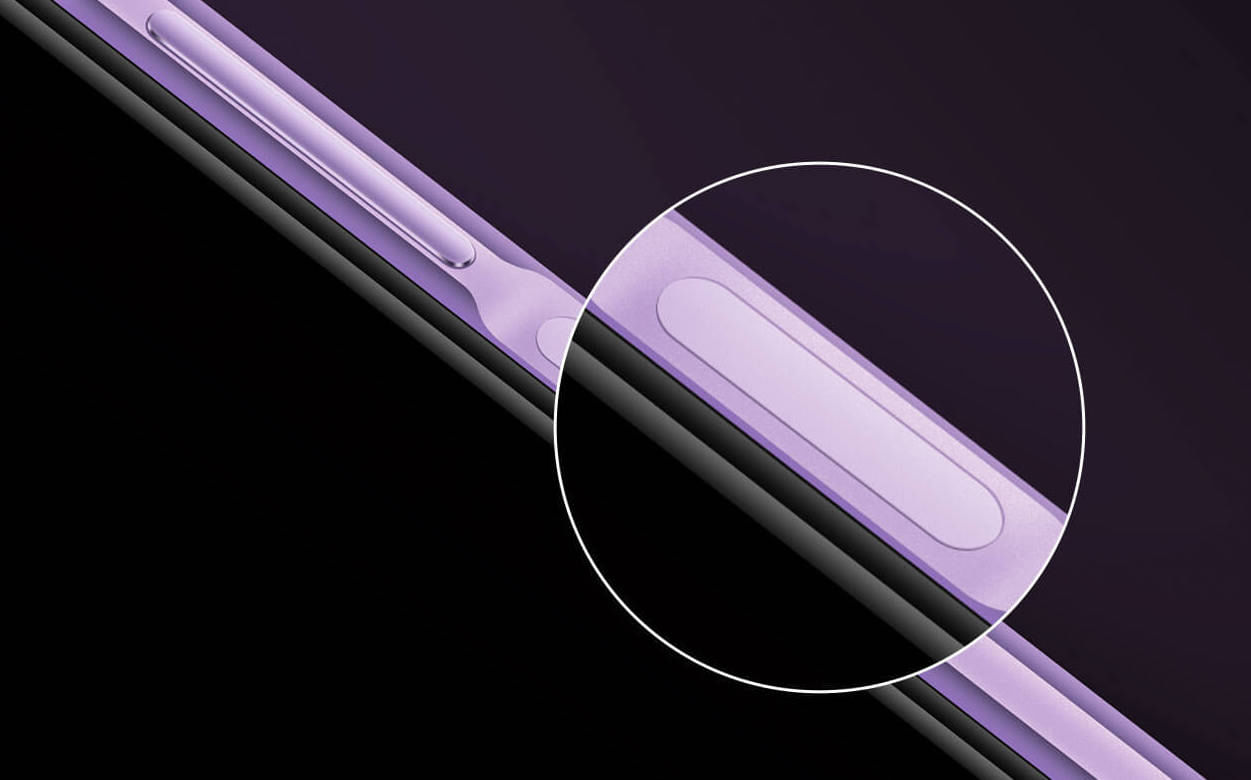
Talking about the placement of the buttons, we can find the power button and volume rockers on the right side with a hybrid SIM tray on the left. The power key also doubles up as a fingerprint sensor which might be uncomfortable for the left-handed users. At the bottom, there is a 3.5mm headphone jack, USB Type-C port for charging and speaker grille. As expected, there is an infrared emitter on the top which can be used to control appliances and more.

All in all, there is a significant improvement in terms of the design department with the second-gen Poco X2 smartphone. Xiaomi has already upped its ante when it comes to the design of its devices and the same is confirmed with the Poco X2 (which is nothing but a rebranded Redmi K30).
Display
We are witnessing some interesting changes in the display as well, on the second Poco device. We’re looking at additions such as 120Hz refresh rate, 500 nits brightness and even HDR10 support. Poco X2 is equipped with a 6.67-inch IPS LCD display panel with a 120Hz refresh rate. Now, the question becomes – Is 120hz display on Poco X2 worth it? We’ll try to answer this in this section.
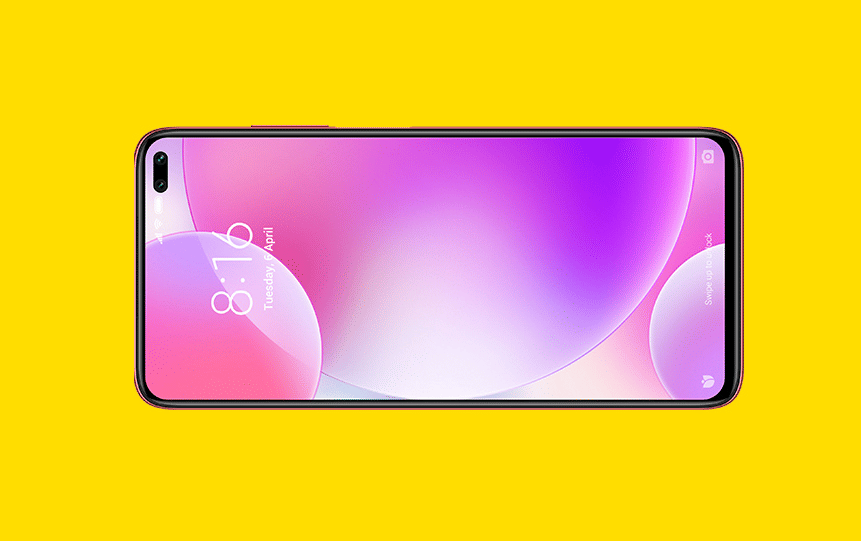
As mentioned earlier, we have been using the device for a number of weeks now. Now, the thing is the 120Hz display panel on this device is not that swaying. The software optimization isn’t there yet so the interface switches dynamically between 60Hz and 120Hz which results in stuttering while scrolling. Most of the time, you see the 120Hz refresh rate kicking in and then the entire experience is buttery smooth. But again, the software optimization for that is pretty poor.
The smartphone makes use of the IPS LCD panel and manages to offer a decent viewing experience. The blacks are deep but not as good as the OLED panel and the same goes for the punchy colours. The company has also thrown in HDR10 capabilities making this device a good decent media-consuming machine.
Poco X2 has a punch hole cutout on the top right corner that houses the dual selfie camera module. That combined with the thin bezels on the side offers a screen-to-body ratio of 84.8 per cent. With 1080 x 2400 pixels resolution and 395 PPI pixel density, the colour, and viewing angles are pretty decent for the price. We used the device in outdoor conditions most of the time and never witnessed trouble watching the content. All thanks to the 500 nits brightness level of the display.
With that said, Poco X2 offers a solid display experience for the asking price tag. But when it comes to the 120Hz panel, things are quite insignificant largely due to the lack of proper software optimizations. The final decision should not be solely based on the refresh rate but rather on the other factors as well.
Performance
The first-gen Poco F1 was famous for its flagship-grade chipset paired with large memory capacity making it a much appealing option. Well, that changes a bit with the new Poco X2. Poco has now switched the chipset with the mid-range one. Under the hood, the smartphone is powered by a Qualcomm Snapdragon 730G SoC paired with up to 8GB RAM and up to 256GB onboard storage.
For those who’re unaware, the Snapdragon 730G chipset is manufactured over the 8nm fabrication process. The SoC features eight cores with two Kryo 470 Gold clocked at 2.2Ghz and the remaining six Kryo 470 Silver cores clocked at 1.8Ghz. For graphics, the processor makes use of the Adreno 618 GPU.
In real-time usage, the chipset manages to deliver a sweet middle ground with an optimized battery experience. Whenever you need high performance during gaming, the processor is able to churn that out effectively. For those unaware, the G in the SD730G moniker means that the chipset is a beefed-up version of regular SD730 SoC. We tried playing heavy games such as PubG Mobile and everything ran quite smoothly. In our gaming sessions, we didn’t witness any frame drops, lag or rendering issues.
It is worth mentioning that most games are capped out at 60fps meaning the 120Hz refresh rate panel is senseless. You will still get the same gaming experience like that of any device with a 60Hz panel. Although there are a few improvements in the precision while playing games on the 120Hz panel.
With that said, the overall performance of the device is quite optimized and decent. But the lack of a flagship chipset is a bit of a bummer. With that alone, you can say that Poco X2 is not a true successor of the first-gen Poco F1.
Software
Coming to the software, Poco X2 runs on the latest Android 10 operating system with MIUI 11 custom skin on top. As expected, the device makes use of Poco Launcher just like the previous F1 smartphone. The software experience is quite disappointing with the heavy amount of bloatware installed on the device.
What is most annoying is the fact that the company’s GetApps store throws in multiple annoying notifications asking us to download useless applications. At various points, it even asked us to watch some random videos. That’s like one of the most annoying problems in the UI. To make things even worse, you will see promotional messages on the lock screen along with ads and promoted content in the default apps. Basically, you’re looking at the user interface that Xiaomi delivers with its Redmi lineup of devices. As expected, there are a plethora of Mi applications pre installed on the device. You’re looking at apps such as Mi Pay, Mi Credit, web browser, photo gallery, calendar and many more. Although few of the apps are helpful, the majority of them are either useless or redundant taking up space.
We have already emphasized this a dozen times in our reviews and we will do it again. Xiaomi needs to desperately change its software strategy and do something about these annoying ads and pop-ups. This is definitely going to be a deal-breaker for most users out there including me. Instead of offering 120Hz panels, an improvement in software would have been highly appreciated.
Cameras
On the back, there is a quad-camera module that consists of 64MP primary lens (f/1.9), 8MP ultrawide lens (f/2.2), 2MP macro sensor (f/2.4) and lastly, 2MP depth sensor (f/2.4). On the front, there is a dual-camera module in the punch-hole cutout with a 20MP regular and 2MP depth sensor. Coming to the camera interface, everything is nicely laid out and you should not face any trouble using it. If you are already a Xiaomi or Poco user, the entire experience is quite stable and straightforward.
The 64MP primary lens uses pixel binning technique to churn out 16MP shots by default. As you might have guessed, you can click at 64MP resolution as well by changing the settings in the camera app. At this price, the phone offers a pretty good result in almost all the scenarios. Aspects such as dynamic range, colour reproductions are quite decent and on the positive side.
In the daylight conditions, the images turn out to be perfectly fine with very minimal noise and grain. We did notice some noise when we switched to the 64MP resolution image mode. The ultrawide lens also clicks a solid picture with a good job at distortion correction. The Macro lens can help you take close up shots and should be functional for many users out there. The depth sensor also does the job pretty well but has some few optimizations issues. For instance, the software sometimes is not able to differentiate the hair with the background and ends up delivering a slightly out of proportion blur.
Moving over to the selfies, the cameras again work exceptionally well with a good amount of details. Sometimes the dynamic range is more on the overexposed side. All in all, you’re looking at a very good selfie camera performance considering the price tag. The depth sensor also works quite well and the portrait shots turn out to be very good.
Battery
Packed inside, the Poco X2 has a large 4,500mAh battery which comes with a 27W fast charging adapter. Thanks to the mid-range optimized performance, the battery life on the device is on the positive side. With a 120Hz refresh rate, the battery is able to churn out a full day usage on a single charge. In 60Hz mode, the battery should last you a few hours longer. Our daily usage looks something like this – WiFi & Bluetooth always on, two or three long gaming sessions, media streaming via YouTube & Netflix, long hours of music playback and of course, camera.
To top up the battery instantly, the company has gone with the 27W fast charging support which is a very solid addition in our opinion. The phone charges from zero to 100% in a little over an hour which is pretty decent.
Audio, Connectivity, Biometrics
For audio, we’re looking at a loudspeaker present on the bottom. Sadly, the device does offer a dual stereo speaker effect which is acceptable at this price tag. The overall speaker is quite loud and we haven’t noticed any kind of sound distortion at max volume levels. Furthermore, there is a 3.5mm audio jack at the bottom as well. The audio output from that is also exceptionally well and the entire experience was expectedly great.
Coming to the biometrics, the company this time has gone with the side-mounted fingerprint sensor. The power button on the right side doubles up as a fingerprint sensor and is fairly fast. Although the area is quite small which makes things a bit inconvenient. With that said, you will get used to it in a matter of days. There’s also software-based Face Unlock that you can make use of but it is not that secure.
The device offers numerous connectivity options just like any other phone in this price tag. We’re looking at standard features such as dual-band WiFi, Bluetooth 5.0 (A2DP, LE), GPS, Infrared sensor, FM Radio and USB Type-C port for charging. There’s no NFC if you are wondering just in case.
It’s time for the moment to answer the foremost question along with many others. First up, it is pretty clear that the all-new Poco X2 is not a true successor to the previous Poco F1 device. In fact, it is a rebranded Redmi K30.
Even though the company has improved on the design bit by adding that glossy finish and modern looking colours, the performance has taken a major hit. The appeal that used to be there with the Poco devices is no longer present. Instead, you are getting a mid-range beefy chipset. In essence, Poco X2 was not able to differentiate itself from the crowd which is something we saw with the Poco F1.
Now the question is – Should you go ahead with this device? Well, my answer would be quite sceptical. There’s nothing bad with this device and it managed to satisfy us in almost every aspect. It does miss that appealing factor that you can find in the Redmi K20 device. The final choice boils down to your personal preference. If you are willing to overlook the 120Hz display panel, then there are some solid options from other brands that you can consider. With that said, we are concluding our review of Poco X2.