Google Pixel 10 Price in India and Variants
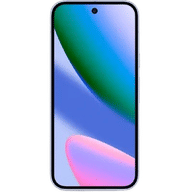
The Google Pixel 10 was launched in India at a price of ₹79,999 and is available exclusively in a 12GB RAM + 256GB storage variant. The phone comes in four colours: Obsidian, Frost, Indigo, and Lemongrass. Its price on Flipkart fluctuates, and it is often available for significantly less through bank offers and sales. You can buy it via Flipkart, the Google Store, or other retail partners.
Google Pixel 10 Box Contents
The Google Pixel 10 packs the following items inside the box:
- Phone
- Type C cable
- SIM ejector tool
- Documentation
Google Pixel 10 Specs at a glance
Before we talk in detail about the Google Pixel 10, let’s see what the on-paper specs look like:
- Display: 6.3-inch OLED AMOLED screen
- Chipset: Google Tensor G5 (3 nm)
- RAM & ROM: 128GB 12GB RAM, 256GB 12GB RAM
- Software: Android 16, upgradable to Android 17, up to 7 major OS updates
- Rear camera: 48MP, 10.8MP, 13MP
- Selfie camera: 10.5MP
- Battery: 4970mAh
- Weight: 204 grams
- Dimensions: 152.8 x 72 x 8.6 mm
Google Pixel 10 Review: Design and Build
Google Pixel 10 is a compact 6.3-inch phone, neither too big nor too small. It’s slightly larger than an iPhone 16 Pro or iPhone 17 Pro. The moment you pick it up, the first thing that comes to mind is how much it feels like an iPhone.

However, the camera visor design on the back makes it immediately recognisable as a Pixel. If you were to hold it with your eyes closed, the in-hand feel would be just like an iPhone.

The back is made entirely of glass, and the frame is aluminium. The glass finish looks great, though it is quite a magnet for fingerprints.

It definitely offers a premium feel; even people unfamiliar with the Pixel 10 often ask what phone it is. With Gorilla Glass Victus 2 on both the front and back, it provides solid protection.

The phone weighs approximately 204 grams and is about 8.6mm thick. It might feel a bit chunky at first, but I didn’t encounter any issues holding it during use. The weight distribution is well-balanced, and the phone remains stable even when held in the middle with one hand.

On the right side, you’ll find the power button and volume rocker; they are easy to press and provide good haptic feedback. The left side is completely clean. At the bottom, there are dual speakers and a USB 3.2 Type-C port. The phone also carries an IP68 rating for water resistance. While I have seen an IP69K rating in some phones, I'm ok with the current one.
Also Read: OPPO Reno16 5G Long-Term Review: Pretty, Powerful Camera, Pricey
Google Pixel 10 Review: Camera
The Google Pixel 10 includes a telephoto lens, a significant upgrade over the Google Pixel 9. On the back, there is a 48MP main camera, a 13MP ultra-wide lens, and a 10.8MP 5x telephoto camera. For selfies, there is a 10.5MP front-facing camera; selfies now look better, with improved depth and greater clarity.

One thing that disappointed me is the zoom capability. While the Pro model offers better zoom, this version is limited to 20x via the 5x telephoto lens. I had expected at least 50x zoom. That said, 20x is sufficient for most everyday use.
Also, you cannot take portrait shots using the telephoto lens, which I found a bit odd. While I have no major issues with the camera's quality, I took a few shots in the evening light and got amazing results. I even shot a few photos in the office Diwali celebration, and the results were amazing.


For video, both the front and rear cameras support 4K 60 fps recording, so there are no compromises. The camera is well-suited for vlogging or recording events, and I found the clarity to be perfectly fine.
In low-light conditions, the camera does struggle a bit, and the depth effect is less pronounced; however, it’s not "bad"; it’s quite acceptable for a phone in this price range.
Just one suggestion for readers: evaluating a smartphone camera isn't always straightforward. Many people test a phone under the bright, ideal lighting conditions of a store, only to discover later that it struggles in low light or overly bright environments.
My advice is to test the camera in different lighting conditions before making a decision. Don't get carried away by marketing-friendly sample photos, as they may not reflect real-world performance.
Instead, look for camera samples taken in challenging lighting conditions to get a more honest idea of what the camera is actually capable of.
Also Read: OPPO Reno 16c Review: Three Weeks Later, Here’s My Honest Opinion
Google Pixel 10 Review: Battery and Charging
The Google Pixel 10 features a 4970mAh battery. Google claims a battery life of over 24 hours. In my experience, the phone comfortably lasts through a single day, but you shouldn't expect much more than that. My screen-on time (SOT) was around six hours on normal use. Note that I've been using a second-hand phone for a long time, so if you buy a new phone, then you might get better battery life.

As for charging, the phone supports 30W wired charging, which is slower than what many other phones offer. It also includes Qi2 magnetic wireless charging, referred to by Google as "PixelSnap", which supports speeds of up to 15W and is quite convenient when used with magnetic stands or charging pucks. Notably, the reverse wireless charging feature has been omitted this time around.
Also Read: Samsung Galaxy S26 FE Review: A Better Fan Edition Phone?
Google Pixel 10 Review: Display
The Google Pixel 10 features a 6.3-inch FHD+ OLED display with a resolution of 1080 x 2424 pixels and a 120Hz refresh rate. In my opinion, there is a bit of a compromise here; the resolution could have been better for this price range.

It uses an LTPS panel rather than an LTPO one, which means the refresh rate only drops down to 60Hz, whereas an LTPO display could go as low as 1Hz under ideal conditions.
Nevertheless, the display is good. It supports HDR10, offers punchy yet natural colours, and provides solid dynamic range. With a peak brightness of 3000 nits, the screen remains clearly visible even under direct sunlight.

It supports Full HD streaming and HDR on Netflix, and 4K content on YouTube plays smoothly. There is also an Always-On display, though it lacks customisation options.
As for audio, the Pixel’s speakers are well-balanced. The sound is clear, with good left-right separation, making vocals and dialogue easy to hear. When gaming or watching movies, the directional audio is quite effective. That said, the maximum volume is slightly lower than what you might find on phones from Oppo, Vivo, or Samsung, and the sound profile isn't particularly bass-heavy.
The most significant drawback is the lack of Dolby Atmos support, a feature that should have been included at this price point. The phone also includes the 'Now Playing' feature, which can identify songs playing in your surroundings, even without an internet connection.
Also Read: Samsung Galaxy Z Flip8 Quick Review: The Flip Phone Gets Better
Google Pixel 10 Review: Performance
The Google Pixel 10 features Google’s first fully custom Tensor G5 chipset. It is built on a 3nm process and manufactured by TSMC, a shift from previous generations, which were produced by Samsung.
It comes with 12GB of LPDDR5X RAM and UFS 4.0 storage. Pixel devices have always been known for their excellent RAM management, and that holds true here as well. Whether you have apps like Instagram, YouTube, Chrome, Maps, Telegram, or BGMI running in the background, they don’t need to reload, even after several hours.
I’ll admit that in terms of raw performance, the Tensor isn’t the market leader. However, in day-to-day use, it doesn’t feel like the benchmark scores might suggest. In my experience, scrolling, animations, app switching, and camera operations are all smooth. I haven’t encountered any major issues.

Now, the big question: does the phone get hot? The answer is yes. It’s not as hot as older Tensor chips, but it’s not exactly "cool" either. The device gets warm during 4K video recording and BGMI gaming, which is quite concerning given the price point. That said, I didn’t face any problems during everyday tasks like using WhatsApp, Instagram, Chrome, or YouTube.
This phone isn’t really designed for gaming. In BGMI, with settings at "Smooth" and "Extreme," the average frame rate hovered around 60 FPS. The gameplay is smooth, but those looking for 120 FPS might find this a bit of a downgrade.
In my view, this phone isn’t built for serious gamers, though you can certainly play games on it. Personally, for serious BGMI sessions, I would choose the OnePlus 13R instead, which I reviewed a few days back.
Also Read: Samsung Galaxy Z Fold8 Ultra First Impressions: Slimmer, Smarter, But Is It Truly Ultra?
Google Pixel 10 Review: Software and UI
In reality, this is the primary reason people buy a Pixel: the software is, without a doubt, top-notch. Google Pixel 10 comes with Android 16, but I updated it to Android 17.

A major advantage of the Pixel is that it receives Android updates before any other device. Google has promised 7 years of OS and security updates, meaning if you buy it today, you won’t have to worry for years to come.

The UI is stock Android, no ads, no bloatware, no duplicate apps, and no random, unwanted notifications. Just a clean Android experience. When recording calls, the other party is notified; however, you can customise how this is announced, either via a voice prompt or a simple beep.

I really liked Google’s collection of wallpapers; there are static, live, weather-based, and cinematic options, and you can even generate your own using AI. On the lock screen, you can customise the clock style and shortcuts.

I also appreciate the 'Notification History' feature. If you accidentally swipe away a notification, you can still view it later by enabling this feature. The phone also includes 'Theft Detection ': if someone snatches the device from your hand and runs off, it automatically locks itself. There’s also a built-in Google VPN, which is useful when using public Wi-Fi.

You can set specific actions, such as taking a screenshot, playing/pausing media, toggling the flashlight, or launching Gemini, to trigger when you double-tap the back of the phone.
There’s also an 'auto-rotate' feature based on face detection; while most phones rotate the screen the moment they tilt, the Pixel uses your face orientation to decide when to rotate. I find the behaviour on my other phone quite annoying, so I really appreciate this feature.
During calls, you can send emojis, which trigger sound effects for the person on the other end; it’s a fun touch.
'Magic Cue' is a highly intelligent feature found on the Pixel. If event details appear in an SMS and the same event also exists in your calendar or email, your phone can understand the context and offer relevant suggestions.
While it may occasionally miss the mark for now, it is expected to improve with future updates. On Android, the best implementation of Gemini is still found on Pixel devices; it doesn’t just feel like a chatbot it feels like an integral part of the phone itself.
Also Read: OnePlus 13R Long Term Review: Gaming, Battery, and Camera After Months of Real Use
After using it for several months, I can say that I really like the Google Pixel 10. Its AI features and UI experience set it apart from other phones, and it also offers a premium feel in the hand. The clean software and 7 years of support are the phone's greatest strengths.
There are downsides, too. In terms of raw performance, the Tensor G5 falls short of chipsets like the Snapdragon 8 Elite; the display resolution could have been higher for this price point, and the absence of features like Dolby Atmos or an IP69K rating is disappointing. The price is also quite high. This phone is not intended for gamers. I hope you liked my Google Pixel 10 review.