

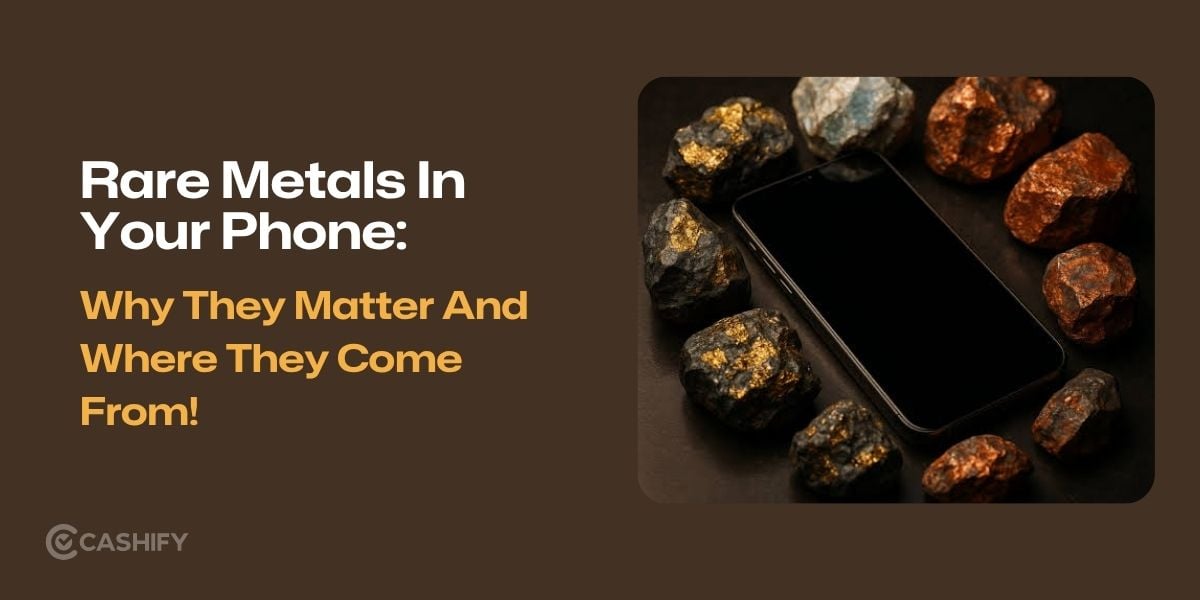
Have you wondered that your smartphone could be an abode of rare metals of the earth that hold market value? Yeah, it does much more than make calls and run apps. It stores energy, processes information, captures images, and connects to wireless networks. And these functions depend on a complex mix of materials.
Some materials are familiar, such as copper, gold, and lithium. Others include tantalum, indium, tungsten, and rare earth elements. Each serves a specific purpose in modern electronics.
But where do these materials come from? Why do smartphone manufacturers need them? And what happens when an old phone reaches the end of its life? Here's an interesting take on this topic that reveals a much bigger story.
Also read: How Cashify Is Turning India’s E-Waste Management Into a Sustainability Movement?
What Are Rare Metals? Are They Really Rare?
The term "rare metals" is often used to describe metals that are difficult to source, process, or replace. However, it is not a single, universally defined scientific category.
Three related terms help explain the subject.
- Rare earth elements: A group of 17 elements. This group includes the 15 lanthanides, along with scandium and yttrium.
- Critical minerals: Materials considered important to an economy or industry. Their supply may face significant risks.
- Precious metals: Metals valued for properties such as corrosion resistance, conductivity, or scarcity. Gold, silver, and platinum belong to this group.
These categories overlap in some cases. However, they are not interchangeable.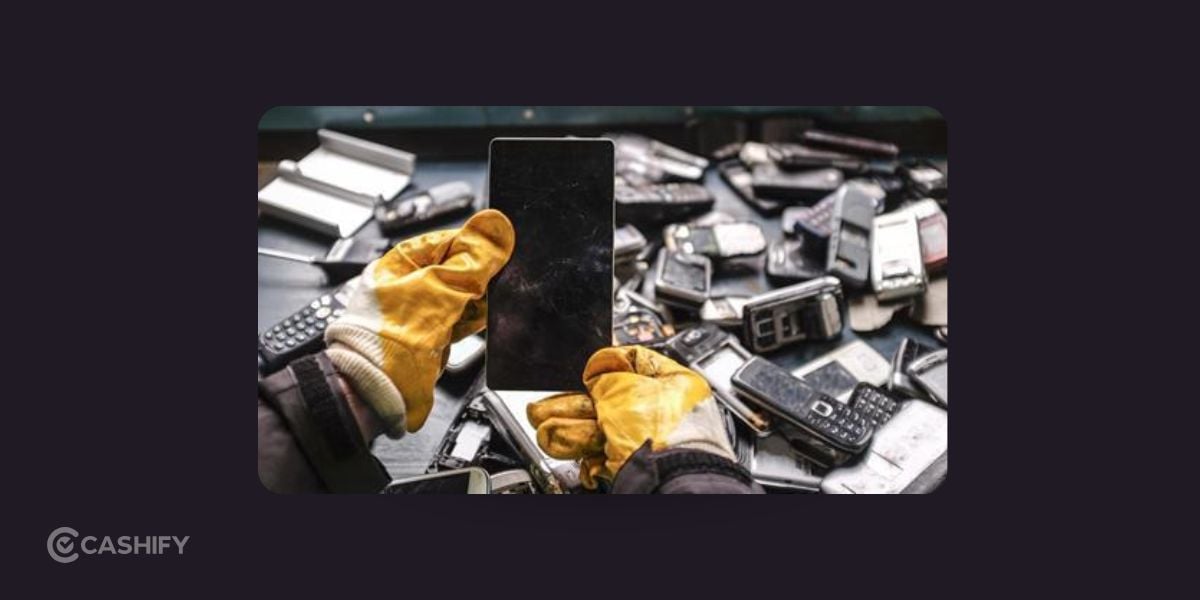
Which Metals Are Used In Smartphones?
A smartphone contains a combination of metals, minerals, plastics, glass, and ceramics. Their exact composition depends on the model and its components.
The US Geological Survey (USGS) identifies several mineral commodities used in mobile devices. These materials support their electronics, displays, batteries, and speakers.
Here are some important examples.
Metal or material | Where it is used | Why it matters |
|---|---|---|
Lithium | Rechargeable batteries | Helps store and release electrical energy |
Cobalt | Certain battery cathodes | Supports battery performance and stability |
Tantalum | Certain capacitors | Enables compact components that store electrical charge |
Tungsten | Some vibration mechanisms | Provides a dense material for compact moving components |
Indium | Certain display layers | Helps create transparent conductive coatings |
Neodymium and other rare earth elements | Selected speakers, receivers, and vibration components | Help create strong, compact magnets |
Gold | Electrical contacts and circuit connections | Resists corrosion and provides reliable conductivity |
Copper | Circuit boards and wiring | Carries electrical signals and power |
Silver | Selected electronic contacts and conductive materials | Offers excellent electrical conductivity |
Gallium | Selected semiconductor components | Supports specialised electronic and radio-frequency functions |
Germanium | Selected semiconductor and optical applications | Supports particular electronic and light-related functions |
Nickel | Certain battery cathodes | Contributes to battery energy density |
Graphite | Battery anodes | Provides a structure for lithium storage |
Not every smartphone contains all these materials in the same form. Manufacturers also use different component designs and material combinations.
Also Read: Ways In Which Recycling Helps Our Environment
Where Do The Rare Metals In Smartphones Come From?
The metals inside your phone travel a long way before they become part of a device. The process starts with mining and ends with assembling the phone. Let's look at how it works.
Step 1: Mining The Raw Materials
The first step is to find and extract minerals from the Earth. Different metals come from different types of deposits.
For example, lithium comes from hard-rock minerals or underground saltwater called brine. Cobalt is often mined alongside other metals, such as copper and nickel. Tantalum comes from minerals such as coltan.
Each material needs a different mining and extraction process. The method depends on where the deposit is found and how easily the material can be recovered.
Step 2: Processing And Refining The Metals
Raw minerals cannot usually go straight into a smartphone. They first need to be processed to separate the useful material from the rest of the ore.
The material then goes through refining. This step removes impurities and makes it suitable for further use.
Some metals are also recovered while producing other materials. Gallium is one example. It can be recovered during aluminium production from bauxite or from certain residues produced during zinc processing, according to the US Geological Survey (USGS).
This means the supply of one metal can depend on the production of another.
Step 3: Turning Metals Into Phone Components
Once the materials are ready, manufacturers use them to make different smartphone parts.
These include battery materials, circuit components, conductive coatings, and tiny magnets used in speakers and other systems.
This process often involves several companies. A metal may be mined in one country, refined in another, and turned into a component somewhere else.
Step 4: Putting The Smartphone Together
The final step is assembling the phone. Manufacturers bring together components such as the battery, display, cameras, speakers, and circuit boards.
These parts may come from different suppliers around the world. They are then fitted together to create the finished device.
So, even if your smartphone is assembled in India, its materials may have come from several other countries. The place where a phone is made does not necessarily tell you where its metals were mined.
Also read: How Cashify Complies With E-Waste Management Rules
What Happens To These Metals When You Discard An Old Phone?
A smartphone does not lose all its material value when it stops working. Its circuit boards, connectors, magnets, and other components may still contain useful materials.
This makes electronic waste an important resource recovery opportunity.
A 2023 study published in the Journal of Cleaner Production examined metals in discarded phones from multiple generations. It analysed key components, including circuit boards, screens, cameras, and speakers.
The researchers reported that one tonne of end-of-life mobile phones could contain up to 53 kilograms of copper, 141 grams of gold, and 270 grams of silver in their studied material. The study also identified rare earth elements and other valuable metals. These figures describe the study's findings, not the composition of every phone.
This illustrates why recycling can be valuable. Small quantities of useful materials accumulate across large numbers of discarded devices.
What Is Urban Mining?
Urban mining means recovering useful materials from discarded products and waste streams.
Instead of extracting every material from the ground, recyclers recover selected materials from existing products. Old smartphones can provide secondary sources of metals.
However, recovering every element is not straightforward. Some materials occur in tiny quantities. Others are mixed with complex compounds or bonded to different components.
Recycling also requires suitable collection, sorting, processing, and refining facilities.
Also read: How You Can Help The Environment By Selling Your Old Phone On Cashify
Can Smartphone Manufacturers Reduce Their Dependence On These Materials?
Manufacturers can take several steps to reduce material pressure. However, no single solution removes the need for mining.
Improve Material Efficiency
Engineers can reduce the amount of a material used in a component. They can also redesign components to improve performance with fewer resources.
Any change must still meet requirements for safety, reliability, and durability.
Explore Alternative Materials
Battery research continues to examine different cathode and anode chemistries. Some alternatives reduce dependence on particular metals.
However, a substitute may have different energy density, charging performance, cost, or lifespan. Manufacturers must evaluate these trade-offs before adopting it.
Increase Recycled Material Use
Recovered metals can replace some newly mined material. Their use can also create demand for better collection and recycling systems.
The benefits depend on recovery efficiency, material quality, energy use, and the specific production process.
Improve Repairability And Product Life
A smartphone that remains useful for longer may not need immediate replacement. Repairs can extend its useful life.
Software support, battery replacement options, spare-part availability, and durable designs all influence how long a device remains practical to use.
Extending product life does not eliminate material demand. It can help reduce the need for premature replacement.
Build More Transparent Supply Chains
Manufacturers can improve supplier audits and material traceability. They can also disclose more information about sourcing and recycled content.
Better transparency helps businesses identify risks and monitor progress. However, claims should be supported by verifiable evidence.
What Can You Do As A Smartphone User?
Individual choices cannot solve every mining or recycling challenge. However, they can help keep useful devices and materials in circulation.
Here are some practical steps.
1. Keep your phone for longer. Replace it when necessary, rather than treating every new launch as a reason to upgrade.
2. Repair a damaged phone when practical. A battery replacement or screen repair may extend its useful life.
3. Sell or trade in a working device. A phone that no longer suits you may still be useful to someone else.
4. Recycle unusable phones responsibly. Use a recognised collection or recycling programme. Avoid throwing electronic devices into ordinary household waste.
5. Handle damaged batteries carefully. Do not puncture, crush, or dismantle a phone battery. Follow the manufacturer's safety guidance.
6. Avoid storing unused devices indefinitely. If you no longer need a phone, consider resale, reuse, or responsible recycling.
Cashify's resale and trade-in services can provide one route for extending the use of eligible devices. Check the current service availability and terms before proceeding.
Also read: How Irresponsible Disposal Of Electronics Is Hurting Our Environment
Final Words
The metals inside your smartphone do more than keep it running. They help power its battery, make the touchscreen work, and keep its speakers and other components running smoothly.
But getting these materials isn't always easy. They have to be mined, processed, and turned into parts before they reach your phone. This process involves several countries and can put pressure on natural resources.
The good news is that we can make better use of these materials. Keeping your phone for longer, repairing it when needed, and recycling it properly can all help reduce waste.
Your phone may be small, but the journey of the materials inside it is much bigger than you might think.
If you’ve just bought a new phone and don’t know what to do with your old phone, then here’s your answer. Sell old mobile to Cashify and get the best price for it. If you are planning to buy a new phone, check out Cashify’s refurbished mobile phones. You can get your favourite phone at alm