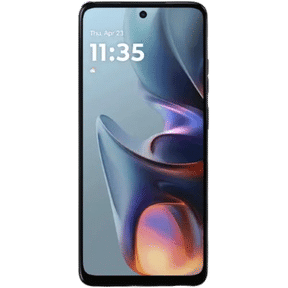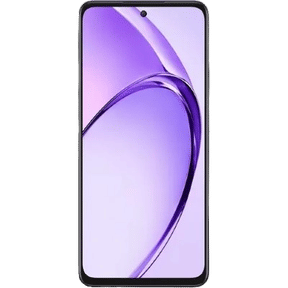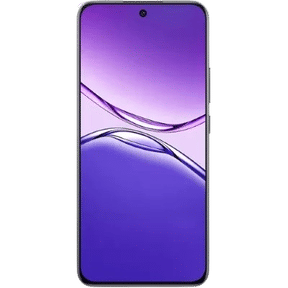



If your choice is dwindling between Oppo or Xiaomi phone, you must be also going through the ColorOS 17 vs HyperOS 4. Because software does matter! Both interfaces have received major upgrades in 2026. However, their priorities are slightly different. ColorOS 17 focuses on fluid animations, intelligent AI assistance and long-term smoothness. HyperOS 4 puts greater emphasis on performance optimisation, ecosystem connectivity and AI-powered productivity.
Let's find out how they compare in various factors.
ColorOS 17 vs HyperOS 4: At a Glance
Feature | ColorOS 17 | HyperOS 4 |
|---|---|---|
Developer | OPPO | Xiaomi |
Android base | Android 17 | Android 17 |
Interface design | Living Flow Design | Soft Light Glass |
Performance engine | Luminous Rendering Engine and Laminar Flow Engine | Xiaomi HyperCore |
AI platform | OPPO AI | Xiaomi HyperAI |
Main AI highlight | AI Mind Pilot Agent Mode | AI Voice Notes and AI Speech Recognition |
Personalisation | Dynamic visuals, fluid animations and lock-screen customisation | Lock-screen clocks, stacked notifications, widgets and resizable folders |
Ecosystem | OPPO devices and connected services | Xiaomi, Redmi, POCO and connected devices |
Rollout | Started October 2026 | Global rollout started November 2026 |
Feature availability varies by smartphone, market, language and software build. This comparison focuses on the global software versions.
ColorOS 17 vs HyperOS 4: Which One Is Better?
The short answer is that ColorOS 17 has an interesting edge in AI-powered everyday tasks. HyperOS 4 is a strong choice for users who want deeper device customisation and Xiaomi ecosystem integration.
Both software versions introduce redesigned interfaces, performance improvements and smarter AI tools. They also share a noticeable design direction, with translucent panels, lighting effects and smoother transitions becoming a bigger part of the experience.
But the differences become more interesting once you look beyond the appearance.
1. Design and User Interface: Living Flow vs Soft Light Glass
HyperOS 4 takes a slightly different approach with its Soft Light Glass design. Xiaomi introduces translucent surfaces, adaptive lighting, layered notifications and a more flexible visual hierarchy.
It also adds practical personalisation options, including:
- Flexible lock-screen clock sizing and typography.
- Notification stacking for cleaner notification management.
- Resizable home-screen folders.
- Widget stacking for better home-screen organisation.
In my view, HyperOS 4 gives users more interesting home-screen organisation options, while ColorOS 17 puts greater emphasis on the way the interface responds to touch.
2. Performance: Which Software Is Smoother?
Both companies have introduced new system-level technologies to improve smartphone responsiveness. However, their approaches are different.
ColorOS 17 performance improvements
 OPPO uses two major technologies:
- Luminous Rendering Engine: Uses a unified rendering architecture to reduce unnecessary rendering work and memory usage.
- Laminar Flow Engine: Manages system resources more intelligently to improve app launches and multitasking.
According to OPPO Lab, ColorOS 17 achieves up to 30 per cent lower rendering load and 25 per cent lower RAM usage for rendering in key scenarios compared with ColorOS 16.
OPPO also claims better app launch stability, faster first-time Gallery thumbnail loading and more apps retained in the background. These are manufacturer test results, not independently established improvements across every smartphone.
HyperOS 4 performance improvements
Xiaomi has upgraded its HyperCore architecture with three important technologies:
- Precision Workload Scheduling: Monitors workloads and allocates resources more efficiently.
- Memory Preloading: Prepares frequently needed resources to improve responsiveness.
- Application Runtime Environment: Improves the way system applications operate.
Xiaomi's official testing reports an 8.7 per cent reduction in the total hot-launch time of 30 apps after nine hours of use, compared with HyperOS 3. It also reports lower frame-drop rates during video playba
The numbers from the two brands cannot be directly compared because their testing methods and workloads differ.
For everyday users, both updates aim to reduce stutters, improve app switching and maintain responsiveness during longer sessions.
3. AI Features: OPPO AI vs Xiaomi HyperAI
AI is one of the biggest differences in the ColorOS 17 vs HyperOS 4 comparison. Both interfaces have moved beyond basic AI chat assistance. They now include tools designed to help users organise information, process recordings and complete everyday tasks.
What ColorOS 17 brings
ColorOS 17 introduces several AI features:
- AI Mind Pilot: Its Agent Mode can work with photos and files stored on the device, organise information and complete multi-step tasks.
- AI Photo Agent: Lets users edit images using natural-language instructions and apply styles from reference images.
- AI Mind Space: Saves and organises information into searchable collections.
- AI Mind Suggest: Surfaces contextual information such as travel reminders and flight updates.
- OSee: Uses camera-based AI to recognise objects and connect users with relevant tools and information.
AI Call Guard is another useful addition, with real-time detection designed to identify suspicious calls, including potential synthetic-voice scams.
What HyperOS 4 brings
 Xiaomi HyperAI focuses on productivity and connected AI experiences.
Some of its key features include:
- AI Voice Notes: Converts voice recordings into structured notes, with summaries, to-do extraction and mind maps.
- AI Speech Recognition: Helps organise recordings, identify key points and generate outlines.
- AI Answers: Combines web search with AI-generated responses.
- AI Translate Conversation: Supports real-time translation of face-to-face conversations.
- AI Gallery Search: Helps users locate images using search.
- AI Creativity Assistant: Provides AI-based image editing tools.
These features can be useful for students, professionals and people who regularly work with voice recordings or large photo libraries.
I would give ColorOS 17 a slight edge here. It is because its Agent Mode has a broader focus on organising files, photos and information through multi-step actions. But Xiaomi's AI tools could be more useful if your daily routine involves meetings, recordings and multilingual conversations.
Remember that not every AI feature is available on every supported phone. Hardware, region, language and internet requirements can affect access.
4. Ecosystem and Connectivity: Which One Works Better Across Devices?
This is where your existing devices can influence the decision.
Xiaomi has built HyperOS around a connected ecosystem. Smartphones, tablets, wearables and smart-home products are included. HyperOS 4 continues this approach. Now it improves cross-device experiences and unified layouts for phones and tablets.
If you already use a Xiaomi phone with a Xiaomi tablet, smartwatch or other compatible smart devices, HyperOS can make switching between them more convenient.
ColorOS 17 also has connected-device features. But OPPO's focus is more visible in its system-wide AI experiences and integration with its own devices and services.
For example, AI Mind Space can connect saved information, photos and documents, while AI Mind Suggest can surface relevant travel information when needed.
5. Privacy and Security: Which One Protects Your Data Better?
AI features are useful, but they also raise an important question: what happens to your personal information?
Both manufacturers have introduced additional security measures in their latest software.
ColorOS 17 security features
OPPO's Private Computing Cloud uses encrypted cloud processing for supported AI services. ColorOS 17 also introduces a Transparency Report that lets users review how AI services access and process their information.
The company has also added post-quantum security capabilities to protect data transmission between devices and its cloud services. AI Call Guard adds another layer of protection against potentially fraudulent calls.
HyperOS 4 security features
Xiaomi has introduced additional security measures, including:
- Post-quantum encryption for supported communication channels.
- Edge-to-cloud AI data security.
- On-device privacy storage.
- Confidential cloud computing on supported devices.
These measures are designed to protect information during AI processing and communication between devices and cloud services.
No clear winner here.
Both companies have introduced promising security features. But manufacturer descriptions alone cannot establish which operating system is more secure in independent testing.
For users, the sensible approach is to review app permissions, restrict unnecessary access to personal files and check which AI services use cloud processing.
6. Software Updates and Device Availability
A good operating system is only useful if your smartphone actually receives it.
ColorOS 17 debuted with the OPPO Find X10 series and started rolling out to eligible OPPO smartphones in October 2026. Its official update roadmap also includes devices scheduled for November, December and Q1 2027.
The rollout covers selected Find, Reno and K-series smartphones, along with compatible tablets. The exact schedule varies by market and device.
HyperOS 4 began its global stable rollout in November 2026. Xiaomi has divided the rollout into three broad phases:
HyperOS 4 began its global stable rollout in November 2026. Xiaomi has divided the rollout into three broad phases:
Rollout period | Selected devices |
|---|---|
Early November 2026 | Xiaomi 17 series, Xiaomi 15 Ultra, Redmi Note 15 series, POCO F8 series |
Mid-November 2026 | Xiaomi 15T series, POCO F7 series, POCO X7 Pro, Xiaomi Pad 7 series |
December 2026 | Xiaomi 14 and 13 series, Redmi Note 14 series, POCO F6 series |
Note: This is a selection of devices, not the complete eligibility list. Xiaomi's official schedule also includes additional Redmi and POCO smartphones and tablets.
For Indian buyers, there is one important thing to remember: a global rollout window does not guarantee that every Indian unit will receive the update on the same day.
7. ColorOS 17 vs HyperOS 4: Pros and Cons
Category | ColorOS 17 | HyperOS 4 |
|---|---|---|
Biggest advantage | Agentic AI and fluid interface | Ecosystem integration and customisation |
Interface | Responsive, translucent design | Soft Light Glass design |
Performance | Improved rendering and app retention | Improved scheduling and memory preloading |
AI | File management, photo editing and contextual assistance | Voice notes, transcription and AI search |
Personalisation | Fluid animations and visual effects | Flexible folders, widgets and lock screens |
Ecosystem | OPPO-focused connected experiences | Xiaomi, Redmi and POCO ecosystem |
Main limitation | AI features have device and regional restrictions | Some AI and security features require supported hardware and regions |
ColorOS 17: Pros
- More advanced AI agent capabilities.
- Improved rendering architecture.
- Better background app retention claims.
- Natural-language photo editing.
- Useful contextual AI features.
ColorOS 17: Cons
- Some AI features are restricted by region and device.
- The translucent design may not appeal to everyone.
- Several performance claims are based on OPPO's internal testing.
HyperOS 4: Pros
- More home-screen organisation options.
- Improved workload scheduling.
- Useful AI voice-note and speech-recognition tools.
- Better integration across the Xiaomi product ecosystem.
- Broad rollout across Xiaomi, Redmi and POCO devices.
HyperOS 4: Cons
- Some AI features are limited by language and hardware.
- Certain privacy technologies are supported only on selected devices.
- Its visual redesign may feel familiar to users who prefer a more traditional Android interface.
Final Verdict On: Which One To Choose?
ColorOS 17 and HyperOS 4 are two competitive Android interfaces, and neither has a decisive advantage across every category.
My pick would be ColorOS 17 for its more ambitious AI agent experience. But I wouldn't switch from a Xiaomi smartphone to an OPPO device just for that feature. HyperOS 4 is a substantial update, and its connected-device advantages can be more valuable if you already use Xiaomi products. Ultimately, the better software is the one that works well with your smartphone and your daily routine.
If you’ve just bought a new phone and don’t know what to do with your old phone, then here’s your answer. Sell your old mobile to Cashify and get the best price for it. If you are planning to buy a new phone, check out Cashify’s refurbished mobile phones. You can get your favourite phone at almost half price with a six-month warranty, 15-day refund and free delivery.