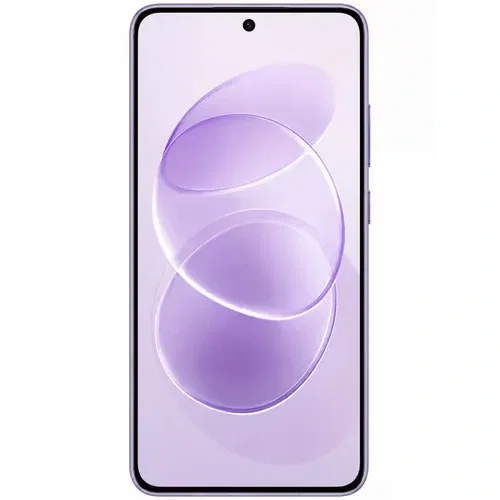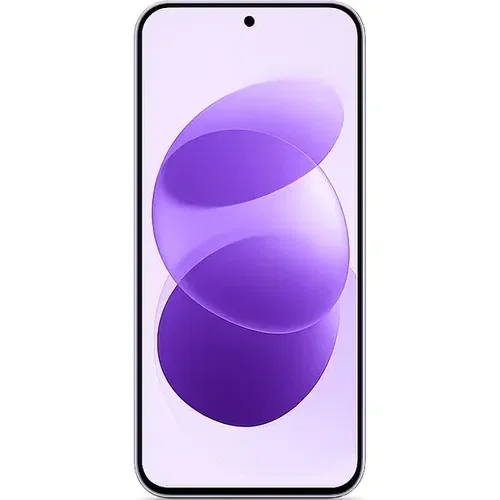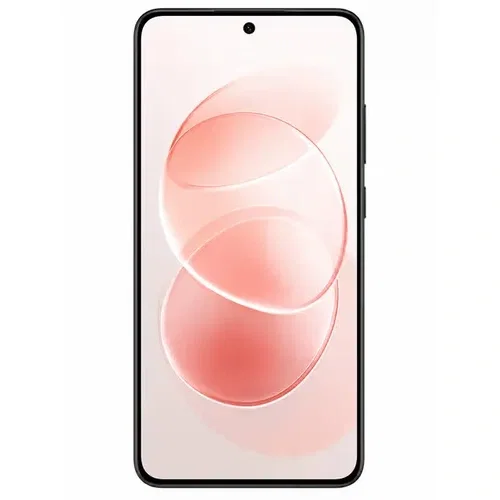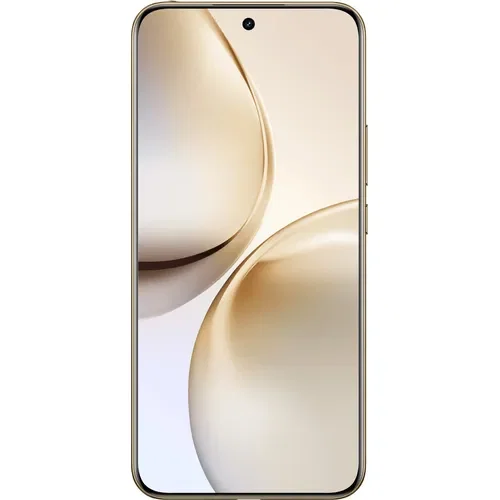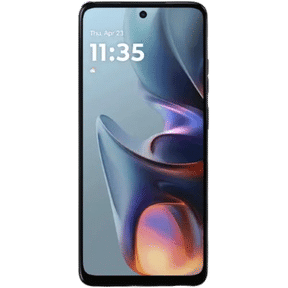



Apple launched its first foldable, the Apple iPhone Duo, while we're seeing an absolute craze on social media about users' experiences. Honestly, this was the first foldable phone I have seen such a craze for among users. However, this is Apple's first foldable phone, so we have seen multiple videos reporting glitches, optimisation issues, and side effects of the matte layer on the screen.
On the other hand, Google is an established player in the foldable market. So, the Google Pixel 11 Pro Fold is a fourth-generation phone that Google has refined over time. Both brands have their own fan base, without any bias. If someone is looking to buy a foldable phone, which should they choose between the Apple iPhone Duo vs Google Pixel 11 Pro Fold? So, let's find out.
Also Read: Samsung Galaxy Z Fold8 Ultra First Impressions: Slimmer, Smarter, But Is It Truly Ultra?
Apple iPhone Duo vs Google Pixel 11 Pro Fold: Price In India
The Apple iPhone Duo starts at Rs. 2,99,900 for the 256GB storage variant in India. The 512GB, 1TB and 2TB variants are priced at Rs. 3,24,900, Rs. 3,74,900 and Rs. 4,49,900, respectively. On the other hand, the Google Pixel 11 Pro Fold is priced at Rs. 1,86,999 in India. This makes Google's foldable considerably more affordable, with a starting price difference of Rs. 1,12,901 compared to Apple's offering.
Apple iPhone Duo vs Google Pixel 11 Pro Fold: Specs At A Glance
Specifications | Apple iPhone Duo | Google Pixel 11 Pro Fold |
Launch Date | September 2026 | August 2026 |
Display (Inner) | 7.6-inch Super Retina XDR OLED | 8-inch Super Actua Flex OLED |
Display (Outer) | 5.4-inch Super Retina XDR OLED | 6.5-inch Super Actua OLED |
Refresh Rate | 120Hz | 1–120Hz |
Peak Brightness | 3,000 nits | 3,600 nits |
Processor | Apple A20 Pro | Google Tensor G6 |
RAM | 12GB | 16GB |
Storage | 256GB, 512GB, 1TB, 2TB | 256GB, 512GB, 1TB |
Rear Camera | 48MP Main + 48MP Ultra-wide | 48MP Main + 10.5MP Ultra-wide + 10.8MP Telephoto |
Optical Zoom | 2x | 5x |
Front Camera | Centre Stage + Under-display camera | 10MP + 10MP |
Battery | Not disclosed | 4,806mAh |
Wired Charging | 60W | 30W |
Wireless Charging | 35W MagSafe | 25W Qi2.2 |
Operating System | iOS 27.1 | Android 17 |
Water Resistance | IP68 | IP68 |
Weight | 254g | 239g |
Folded Thickness | 11.3mm | 10.1mm |
Colours | Star White, Night Sky | Moonstone, Jade |
Starting Price (India) | ₹2,99,900 | ₹1,86,999 |
Apple iPhone Duo vs Google Pixel 11 Pro Fold: Design And Display
The pocket-sized design is the biggest difference between these two phones. Apple's argument is that a standard-size foldable like the Pixel 11 Pro Fold forces you to pick between two giant screens, and half the display often goes black while you watch a movie or do other things. I think that point is fair. I have used the Samsung Galaxy Z Fold 8 and the Fold 8 Ultra, and I found the Fold 8 far more convenient, which is the same idea the iPhone Duo follows.
The shorter, wider body of the Duo makes it easier to carry in a pocket than I would expect for a foldable. The weight is the catch. The Duo is a heavy phone, and I'd expect wrist fatigue when using it one-handed for long stretches.
The inner screens are where I see the clearest gap. The Duo's nano-texture inner display cuts glare outdoors and minimises the crease better than any other foldable. That matters in India, where bright sunlight is a daily problem for glossy panels. The Pixel 11 Pro Fold gives you a bigger 8-inch inner screen and a 6.5-inch cover screen. Google also improved the crease with a larger bend radius in the redesigned hinge, but it is still a conventional glossy panel.
On durability, the Pixel used to stand alone with its IP68 rating, but the Duo now has IP68 and a titanium frame too. I'd say Apple has matched Google here.
Also Read: Samsung Galaxy Z Fold8 First Impressions: Samsung’s Boldest Foldable Yet
Apple iPhone Duo vs Google Pixel 11 Pro Fold: Hinge Mechanism
Both hinges are good, but I think they suit different people.
Apple's hinge is a vari-angle design, and it feels super-smooth and supports different folding modes. It looks built around the software, not added on top of it. Apple designed the iPhone Duo hinge using artificial intelligence algorithms and laser scanning to match each hinge component with its housing and 3D-print up to 25 micro-layers of custom photopolymer to eliminate residual waviness.
Google's gearless hinge is smoother and quieter than before. It is also a friction hinge, so you can leave the Pixel semi-open like a mini laptop, much like the iPhone Duo's vari-angle hinge supports different folding modes. The difference is the body around it. Google fits its hinge into a taller, book-style phone, while Apple builds its into a compact, pocket-friendly one, so the Duo's flexibility is easier to carry and use day to day.
Also Read: Xiaomi 17T Review: A Near-Flagship That Nails The Essentials
Apple iPhone Duo vs Google Pixel 11 Pro Fold: Camera And Battery
Neither of these is a camera-first foldable, and each has a clear weak spot.
The Duo has only two rear cameras. I'd also note that its camera sits a tier below the iPhone 18 Pro, and Touch ID is a step back from Face ID. The results are good, but it is not a camera flagship.
The Pixel's results are consistent, and "Camera Looks" brings some life back to Google's increasingly neutral colours. Its weak spot is zoom, since the telephoto is underwhelming. Some rivals also have better camera hardware, including the Oppo Find N6, Honor Magic V6 and Motorola Razr Fold. So it comes down to what you prefer. I'd pick the Pixel for its colour options and consistency, and I wouldn't expect either phone to beat a dedicated camera flagship.
On battery, I'd give Apple the edge for endurance and Google the edge for charging. The Duo offers strong, all-day battery life. The Pixel's battery is smaller this year, at about 4,806mAh, but faster charging more than makes up for it, and I'd expect around six hours of screen-on time. Not everyone agrees on this, though. Tom's Guide saw only a 15-minute gain over last year's model. The Pixel also has Qi2 magnets, which is a useful extra.
Apple iPhone Duo vs Google Pixel 11 Pro Fold: Performance And Software
This is where the gap is widest. The Duo's A20 Pro chip delivers best-in-class performance. The Pixel's Tensor G6 continues to trail rival silicon in raw power and struggles against Snapdragon phones in graphics tests. With 16GB of RAM, daily use is smooth, so the gap mostly shows up in gaming and heavy tasks.
Software is closer, and it comes down to what you value. The Duo's software is polished, intuitive and fun, with thoughtfully designed multitasking and Apple Pencil (USB-C) support. App support is uneven, though. Engadget says many apps still need optimising, while Tom's Guide found its apps fully optimised but wanted better multitasking. In practice, I think it depends on which apps you use every day.
The Pixel runs Android 17 with seven years of updates and deep Gemini integration. If you want clean Android and strong AI features, it is the better pick. Persistent app-scaling quirks still hold it back.
Verdict
Both phones are premium foldables, but they suit different buyers. The iPhone Duo is the better choice if you want a compact foldable that is comfortable to carry, with a nearly crease-free, glare-resistant screen, stronger performance and polished software. Its drawbacks are the weight and the limited rear cameras.
The Pixel 11 Pro Fold is the better choice if you want a bigger inner screen, a hinge you can park at any angle, clean Android and Google's AI features. Its drawbacks are the slower Tensor G6 chip and the weak telephoto.
Based on my time with the Fold 8 and Fold 8 Ultra, I prefer the smaller, more pocketable style, so the Duo is the one I would lean towards. I hope you liked the Apple iPhone Duo vs Google Pixel 11 Pro Fold comparison; comment your thoughts as well
Are you still browsing through your broken screen? Don’t worry! Book an at-home mobile phone screen repair with Cashify—an affordable and one-stop destination for all your mobile phone needs. In case you break your screen within 1 month of repair, we will replace your screen again—for FREE.