

PHP has been quietly powering a big part of the internet for years. It runs everything from popular blogs to major websites. But what happens when the technology behind so much of the web turns into a security concern? A recent discovery reveals two critical security flaws in its core engine. It is collectively known as PHP2Shell. It has put website owners and developers on alert these days, raising questions about how safe websites really are. Also, how quickly a single flaw can put millions of users at risk.
These PHP2Shell vulnerabilities could allow attackers to execute malicious code on vulnerable servers without logging in first. There is more to this story than a routine security update. So, what is PHP, what went wrong, and how worried should website owners and everyday internet users be? Let’s get down.
Also read: OnePlus 16 Best Camera Settings: Get Better Photos Every Time!
What Do We Know About PHP Security Vulnerabilities?
The PHP security team released emergency patches on October 21, 2026. They addressed the flaws tracked as CVE-2026-109618 and CVE-2026-109619. Both received a CVSS v4.0 severity score of 9.2 out of 10. That marks them as critical issues that administrators should not ignore.
What makes this incident particularly concerning? It’s the security researchers used AI-assisted techniques to help discover and investigate the vulnerabilities. It highlights how AI is changing cybersecurity. It is helping researchers find hidden flaws while potentially making sophisticated exploits easier to develop.
What Is PHP?
PHP is an open-source, server-side scripting language. It mainly used to build dynamic websites and web applications. It’s not like HTML though that structures the content displayed on a page. PHP can process requests, interact with databases, manage sessions, and generate content before it reaches your browser.
For example, when you log in to a website, PHP may check your credentials against a database. It can retrieve your account information, and generate a personalised page.
PHP is widely used across the web. It powers WordPress and supports platforms such as Drupal and Joomla. Wikipedia’s MediaWiki software also uses PHP.
The problem is not that PHP is inherently unsafe. Like other programming languages and software runtimes, it can contain bugs. The concern here is that the newly disclosed flaws exist in PHP’s underlying runtime, rather than being limited to a particular website or plugin.
Also read: Top Most Secure Phone List In The World: You Can’t Hack Them!
What Are PHP2 Shell Vulnerabilities?
PHP2 vulnerabilities, also called PHP2Shell, refer to two serious security flaws found in PHP’s core software. These flaws could let attackers break into vulnerable web servers and run harmful code without needing a login.
The vulnerabilities have two tracking IDs:
- CVE-2026-109618: A flaw that can occur when PHP runs out of memory and handles the error incorrectly.
- CVE-2026-109619: A flaw where PHP may continue using memory even after it has been freed.
In simple terms, PHP can sometimes mishandle its memory while processing a web request, especially when something goes wrong. An attacker could take advantage of this weakness to interfere with how the server works.
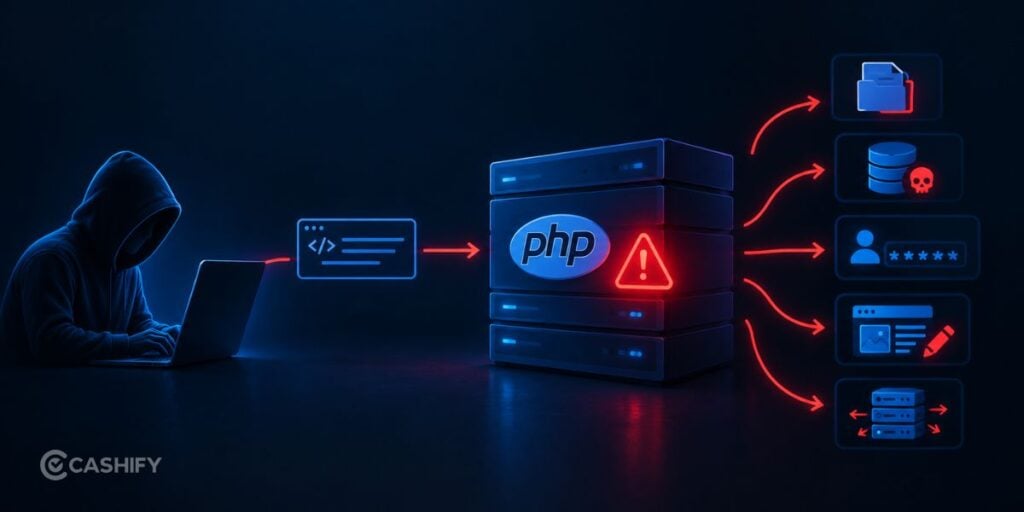
The biggest concern is remote code execution (RCE). It means an attacker could make a remote server run their own code, potentially putting website data and security at risk.
Security researchers demonstrated these flaws against websites running WordPress, Drupal, and Joomla. Since the problem lies in PHP itself, simply switching your website’s platform may not help if it still uses a vulnerable PHP version.
One thing to clear up: PHP2Shell does not mean PHP 2 is affected simply because of its name. PHP2Shell is the name given to this vulnerability family, not a reference to PHP’s old version 2.
What Is Remote Code Execution (RCE)?
Remote Code Execution (RCE) is a security flaw that allows an attacker to make a computer or server run their own code from another location, without needing direct access to the machine.
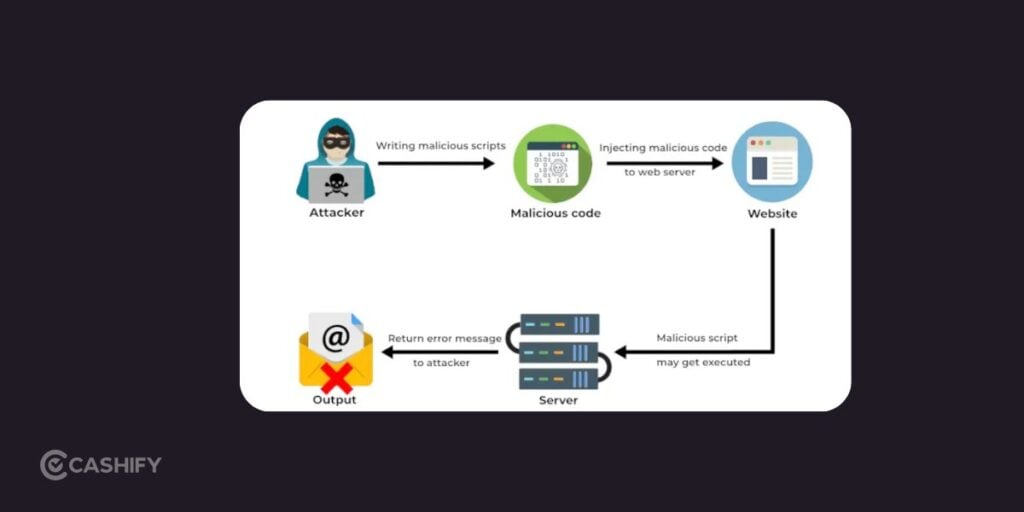
In the case of PHP2Shell vulnerabilities, researchers found the real loophole. attackers could send specially designed web requests to exploit weaknesses in how PHP handles memory and processes requests. This could allow an attacker to run malicious code on a vulnerable server, potentially without even logging in.
If an attack succeeds, the attacker could:
- Access sensitive website files and stored data.
- Steal passwords or other information available to the server.
- Add harmful scripts or maintain access to the server.
- Change website content or disrupt its normal functioning.
- Try to attack other systems connected to the server.
However, the damage depends on the server’s security settings and the permissions available to the attacker. RCE does not automatically give someone complete control over an entire network, but it can open the door to serious security problems.
Also Read: The Best Android VPN Apps
Why Are PHP Security Vulnerabilities Such A Big Deal?
The scale of PHP adoption makes these flaws particularly significant.
A vulnerability in a single plugin might affect websites that use that plugin. A vulnerability in the PHP runtime can potentially affect many different applications running on the same vulnerable software foundation.
Consider a hosting provider that operates thousands of websites. If its servers run affected PHP versions, multiple customer websites could be exposed to the same underlying weakness. The consequences may go beyond individual site owners. Like to hosting providers, businesses, and organisations that depend on their services.
The possible impact includes:
- Data exposure: Customer information, session data, and other sensitive material could be put at risk.
- Website disruption: Attackers could interfere with services, alter pages, or consume server resources.
- Business losses: An incident could lead to downtime, recovery costs, and reputational damage.
- Wider compromise: A compromised server may expose other applications or resources if network access and permissions are not properly restricted.
This is a form of systemic risk. A weakness in widely deployed infrastructure can have consequences across many otherwise unrelated organisations.
However, widespread use does not mean every PHP website has been compromised. Actual exposure depends on the PHP version, server configuration, patch status, and whether an attacker can successfully exploit the flaw.
Also Read: How To Setup A VPN An Windows, Android, iOS, Or Chrome OS!
How AI Helped Uncover PHP2Shell Vulnerabilities
One of the most interesting aspects of this incident is the role of artificial intelligence in security research.
Traditional security audits often involve experts reviewing code, tracing program behaviour, testing unusual inputs, and investigating potential weaknesses. These methods remain valuable, but auditing a large, mature codebase can take substantial time. Subtle memory-management bugs can also be difficult to reproduce and understand.
Wiz Research reported using AI-assisted tools and models during its investigation of the PHP2Shell vulnerabilities. Its researchers credited these tools with helping identify and investigate flaws in the PHP runtime and develop working proof-of-concept exploits.
The research also involved collaboration with other security researchers and the PHP security team. The vulnerabilities were disclosed through a coordinated process before the public release of patches on October 21, 2026.
Does This Mean AI Makes Hacking Easier?
Potentially, yes. AI can help researchers analyse code, explore unusual execution paths, identify suspicious behaviour, and test potential exploit techniques faster.
Both the sides of cybersecurity benefits from this. Defenders can use AI to uncover vulnerabilities and verify fixes. Attackers may use similar techniques to lower the time and expertise required to develop exploits.
The PHP2Shell incident shows this dual-use challenge. Finding a vulnerability is only part of the process. Researchers must also establish its impact, report it responsibly, and give maintainers time to develop a fix.
AI does not replace experienced security engineers, and it does not guarantee that every vulnerability will be found. Its value lies in helping researchers investigate complex software more efficiently.
Also read: How To Send Fake GPS Location On WhatsApp?
What Should Website Owners And Developers Do?
The most important step is to check which PHP version your server is running and apply the appropriate security update.
The PHP development team released patched versions on October 21, 2026:
| PHP branch | Patched version |
|---|---|
| PHP 8.5 | 8.5.12 |
| PHP 8.4 | 8.4.27 |
| PHP 8.3 | 8.3.36 |
| PHP 8.2 | 8.2.35 |
These releases address both PHP2Shell vulnerabilities. The official PHP advisory states that updating is the only complete remediation. Organisations running older, unsupported branches should check with their operating system or hosting vendor for available security fixes and plan a migration to a supported PHP release.
Precautions To Follow For PHP2Shell Vulnerabilities!
Here are five ways to protect your website from PHP2Shell.
1. Update PHP Immediately
Check which PHP version your website uses. Make sure it has the latest security fix.
If you use managed hosting, ask your provider to confirm the update. If you manage your own server, follow PHP’s official update guide.
Updating WordPress, Drupal, or Joomla alone will not fix a PHP vulnerability.
2. Use A Web Application Firewall
A web application firewall (WAF) can block suspicious web requests before they reach your website.
It adds an extra layer of protection, especially if you cannot update PHP right away. However, a WAF is not a replacement for security patches.
3. Check Server Permissions And Logs
Give PHP only the access it needs. Restrict access to sensitive files, databases, and other systems.
Check server logs for unusual activity. Look for suspicious requests, unknown files, or unexpected processes.
If you suspect an attack, investigate it quickly. Also, change any credentials that may have been exposed.
4. Follow Secure Coding Practices
Always check and validate user input. Use parameterised queries when working with databases.
Handle errors safely. Avoid showing sensitive debugging details on live websites.
These steps help prevent common security issues. But they cannot fix flaws in PHP itself.
5. Follow Official Security Advisories
Keep an eye on security updates from PHP, your hosting provider, and your software vendor.
In India, CERT-In shares cybersecurity alerts and guidance. In the US, CISA provides security information and incident-response support.
For PHP2Shell, follow the official PHP security advisory. It provides details about the affected versions and available fixes.
Also read: Who Is Eligible For The Google Pixel Upgrade Program?
Does PHP2Shell Affect Regular Internet Users?
For most people browsing websites, PHP2Shell is primarily a server-side security issue. You generally cannot fix the vulnerability by changing a browser setting. Installing an antivirus application on your phone or computer even won’t help.
The responsibility for patching the affected PHP runtime rests with the website owner, hosting provider, or system administrator.
Still, users can take a few sensible precautions:
- Keep your browser, operating system, and applications updated.
- Use unique passwords and enable multifactor authentication wherever possible.
- Be cautious about unexpected password-reset messages and suspicious links.
- Avoid reusing passwords across different websites.
- If a service you use reports a security incident, follow its official guidance and change affected credentials when advised.
These measures will not patch a vulnerable website, but they can reduce the risk of account compromise through other attack methods.
Finally,
The PHP2Shell incident is a reminder that even widely used technologies like PHP aren’t free from security risks. These PHP2 vulnerabilities have raised serious concerns because they could let attackers run malicious code on vulnerable servers, putting websites and their data at risk.
At the same time, AI is changing how security flaws are discovered, giving researchers new ways to spot problems faster. But finding a flaw is only half the battle. Fixing it before attackers can exploit it matters just as much.
If you run a website, check your PHP version and install the relevant security updates as soon as possible. And if you’re an everyday internet user, keep your devices updated and follow basic account security practices. After all, a safer web depends on both secure technology and the people maintaining it.
If you’ve just bought a new phone and don’t know what to do with your old phone, then here’s your answer. Sell your old mobile to Cashify and get the best price for it. If you are planning to buy a new phone, check out Cashify’s refurbished mobile phones. You can get your favourite phone at almost half price with a six-month warranty, 15-day refund and free delivery.