

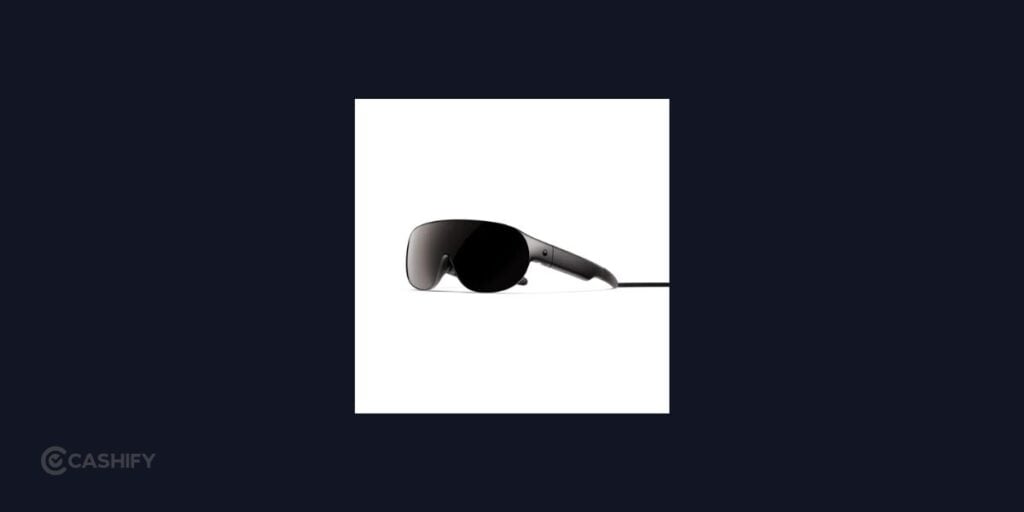
VR headsets have become more advanced, but they can still feel heavy and bulky when you wear them for a long time. Meta is taking a different approach with its upcoming glasses by moving the processor and battery into a separate compute puck. The Meta VR Glasses price and features put them in the premium category, with a starting price of $1,299.99, or around ₹1.09 lakh based on direct currency conversion. They are expected to go on sale in spring 2027.
The glasses weigh around 100 grams, while the separate compute puck weighs about 300 grams. You also get micro-OLED displays, eye tracking, hand gestures, colour passthrough and virtual displays. So, how different are they from regular VR headsets such as Meta Quest 3 and Apple Vision Pro?
Also Read: Samsung Galaxy S27, S27+ and S27 Pro Release Date, Specs And Price
Meta VR Glasses Price And Features: Specs At A Glance
The Meta VR Glasses price and features show that Meta is targeting people who want a high-end VR and mixed-reality experience in a much lighter design.
| Feature | Meta VR Glasses |
| Price | $1,299.99 |
| Availability | Spring 2027 |
| Display | 5K Infinite Display, micro-OLED |
| Resolution | 2,412 × 2,288 per eye |
| Pixel density | 37 PPD |
| Refresh rate | Up to 120Hz |
| Lens | Pancake |
| Field of view | H70° × V66° |
| IPD | 56–70mm |
| Processor | Snapdragon Reality Elite (XR2 Gen 3) |
| RAM | 12GB |
| Storage | 128GB |
| Expandable storage | microSD up to 1TB |
| Glasses weight | Around 100g |
| Puck weight | Around 300g |
| Battery | 3+ hours |
| Tracking | 6DoF |
| Passthrough | 26 PPD RGB |
| Controls | Eye, hand and voice |
| Controllers | Touch Plus supported |
| Charging | 45W USB-C |
The Indian launch price has not been confirmed, so the ₹1.09 lakh figure is only an approximate conversion of the US price.
A Lighter Design
The biggest difference in the Meta VR Glasses price and features is the design.
Traditional standalone VR headsets keep the processor, battery and storage inside the headset. That makes the device heavier because all those components sit on your head.
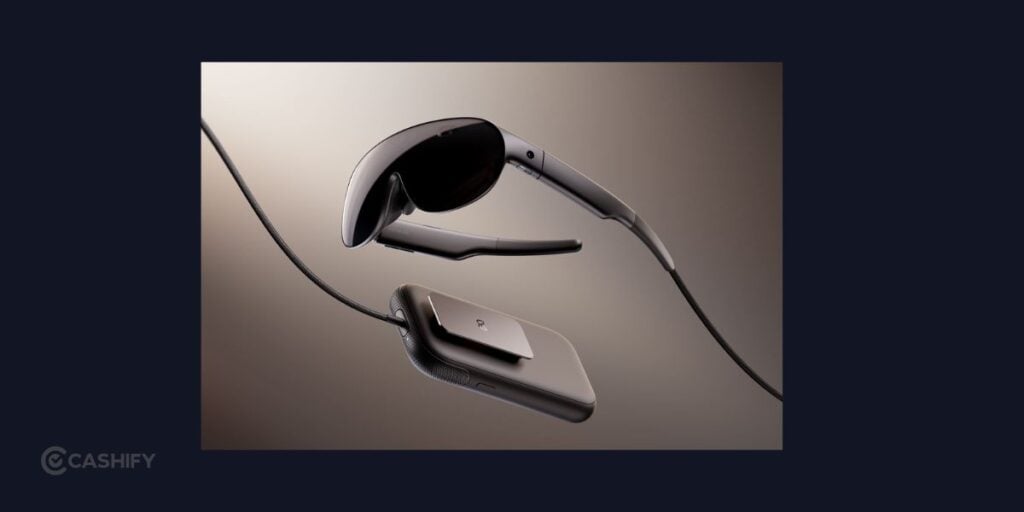
Meta has moved much of this hardware into a separate compute puck.
The glasses themselves weigh around 100 grams. The puck weighs approximately 300 grams and connects to the glasses through an optical tether. You can keep the puck in your pocket while wearing the glasses.
This should make the device more comfortable for longer sessions compared with a heavier headset.
There is one obvious trade-off, though. You still have to carry the puck and deal with the cable connecting it to the glasses. So, Meta has reduced the weight on your face rather than completely removing the extra hardware.
Also Read: How To Add Signature In Gmail: Easy Step-by-Step Guide
5K Micro-OLED Display
The Meta VR Glasses price and features also stand out because of the display.
Meta calls it a 5K Infinite Display, and it uses micro-OLED panels. Each eye gets a resolution of 2,412 × 2,288 pixels, with a pixel density of 37 pixels per degree (PPD).
That higher pixel density should make text, images and virtual objects look sharper.
For comparison, Meta says the Quest 3 offers around 25 PPD. So, the new glasses have a significant advantage in pixel density.
The display can also reach a 120Hz refresh rate. A higher refresh rate can make movement and animations appear smoother, which is particularly useful when you are moving your head quickly or interacting with virtual content.
However, the field of view is around 70 degrees horizontally and 66 degrees vertically. It is therefore narrower than what you get from some traditional VR headsets.
Meta appears to be prioritising sharpness and a compact design rather than simply offering the widest possible view.
Eye And Hand Controls
The Meta VR Glasses price and features also focus on making interaction feel more natural.
The glasses have eye-tracking cameras that allow you to use your gaze as an input. You can look at an option and then use a hand gesture to select it.
Hand tracking also supports gestures such as tapping with your index finger and moving your thumb to scroll.
This means you do not necessarily have to hold a controller every time you want to navigate the interface.
Meta AI also provides voice control, giving you another way to interact with supported features.
However, physical controllers have not disappeared completely. The glasses support Meta’s Touch Plus controllers, so you can use them when you want more traditional controls for gaming or other experiences.
Mixed Reality And Tracking
The Meta VR Glasses price and features include several sensors designed to make mixed reality possible.
The glasses have RGB passthrough cameras with 26 PPD, allowing you to see the physical world in colour while digital content is placed over it.
You also get depth sensing and 6DoF positional tracking.
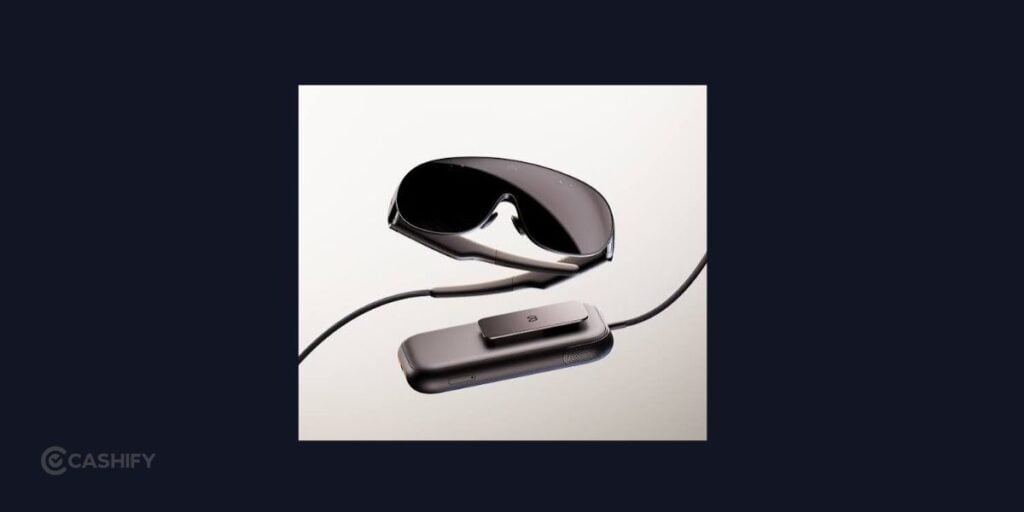
This allows the glasses to understand your movement through physical space. For example, if you move your head or walk around, virtual content can remain positioned in the environment rather than simply moving with your view.
Eye tracking also has another purpose. Meta is using it for biometric authentication through iris detection.
Together, these features make the glasses more than a simple display. They are designed to understand both your surroundings and how you interact with digital content.
Also Read: Apple iPhone 18 Pro Max Vs Apple iPhone 16 Pro Max: Is It Worth Upgrading?
Movies, Gaming And Work
The Meta VR Glasses price and features are not limited to gaming.
The high-resolution display makes the glasses suitable for watching movies and other video content. Meta is also promoting immersive entertainment experiences, including 3D movies and sports.
For work, the glasses can create virtual displays connected to a Mac or PC. You can therefore use a virtual screen instead of carrying a physical monitor.
Phone mirroring is also supported.
Bluetooth connectivity allows you to connect peripherals such as keyboards and gamepads, which can make the glasses more useful for productivity and gaming.
This gives the device several possible uses. You could use it for entertainment at home, gaming, travelling or creating a portable virtual workspace.
Battery And Storage
Meta claims more than three hours of mixed-use battery life. The compute puck can be charged while you continue using the glasses, and a 45W USB-C power supply is included.
Three hours is enough for a movie or a shorter gaming session, but it will not be enough for an entire workday without charging.
Storage starts at 128GB. If you need more space, the glasses include a microSD card slot supporting cards of up to 1TB.
The microSD card is not included with the device.
The separate compute puck also contains the main processor and battery, which keeps those components away from your face but means the overall system is made up of two connected pieces.
How Are Meta VR Glasses Different From Quest 3?
The Meta VR Glasses price and features make the comparison with Quest 3 interesting because both products come from Meta but take different approaches.
Quest 3 is a conventional standalone VR headset. Its processor, battery and other hardware are built into the headset.
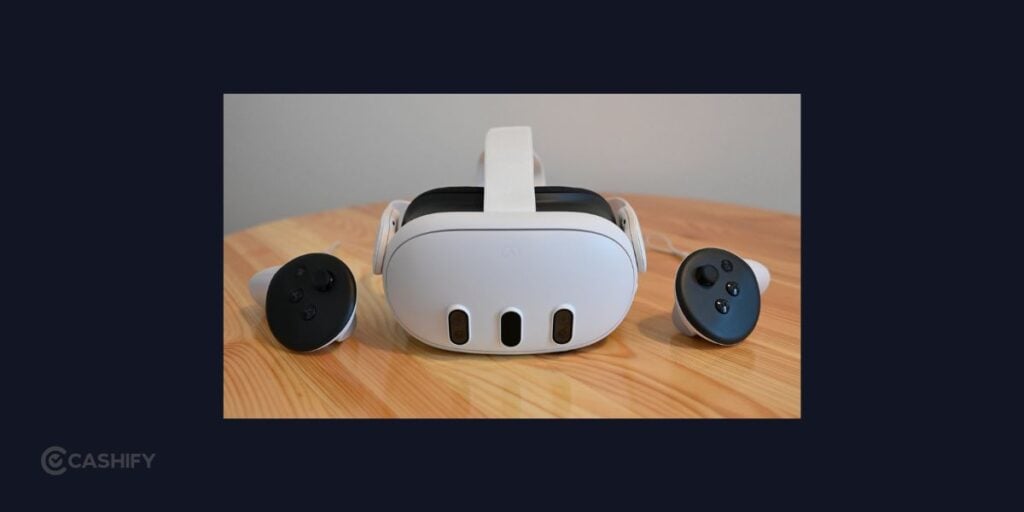
Meta VR Glasses shift those components to the external puck, allowing the glasses to weigh around 100 grams.
The display is another major difference. Meta VR Glasses use micro-OLED panels and offer 37 PPD, while Quest 3 uses LCD displays with around 25 PPD.
However, Quest 3 offers a wider field of view and does not require an external compute puck connected by a cable.
So, the two devices are aimed at slightly different experiences. Quest 3 follows the traditional standalone VR headset design, while Meta VR Glasses focus on a lighter, glasses-like form factor.
How Are Meta VR Glasses Different From Apple Vision Pro?
The Meta VR Glasses price and features also differ considerably from Apple’s Vision Pro.
Vision Pro keeps its computing hardware within the headset, while Meta separates the computing system from the glasses.
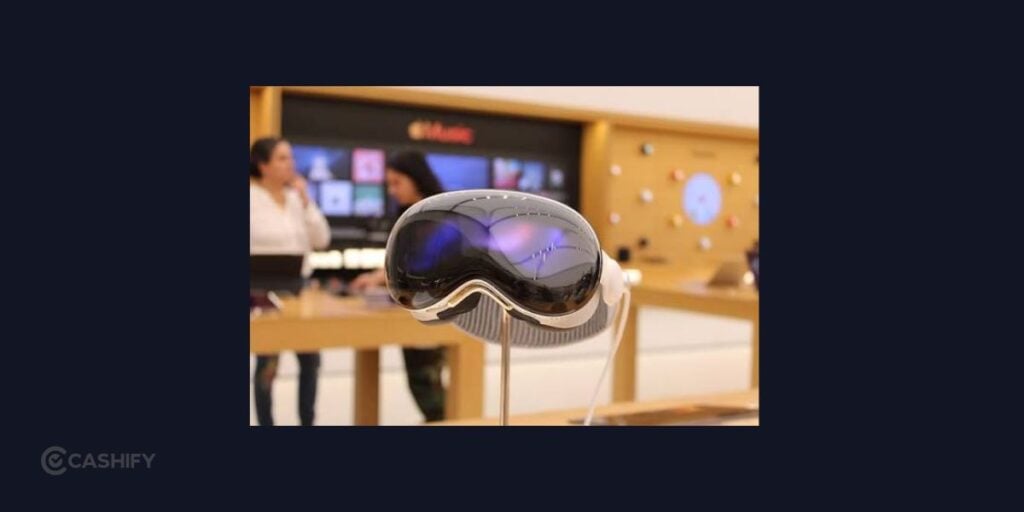
Meta’s glasses are therefore much lighter on your face.
The display approach is also different. Vision Pro has a higher resolution per eye, but Meta VR Glasses claim a higher pixel density of 37 PPD because of their tighter field of view.
This shows why you cannot compare VR displays by resolution alone. Pixel density, field of view, lenses and overall design all affect what you actually see.
Meta’s approach is clearly focused on reducing the physical weight of the device while keeping the visual experience sharp.
Final Thoughts
That’s all about the Meta VR Glasses price and features. Meta VR Glasses take a different approach to VR by moving the processor, battery and storage into a separate compute puck. The Meta VR Glasses features include a 5K micro-OLED display, 37 PPD, eye tracking, hand gestures and colour passthrough.
The lightweight 100-gram glasses are the biggest highlight, although the external puck, cable and around three-hour battery life are compromises. With a spring 2027 launch planned, the Indian price and overall experience will become clearer closer to release.
Also Read: 10 Things That Make iPhone Duo Different From Samsung Galaxy Z Fold 8
If you’ve just bought a new phone and don’t know what to do with your old phone, then here’s your answer. Sell old mobile to Cashify and get the best price for it. If you are planning to buy a new phone, check out Cashify’s refurbished mobile phones. You can get your favourite phone at almost half price with six-month warranty, 15 days refund and free delivery.