

Artificial intelligence (AI) is transforming nearly every part of our lives, and healthcare is no exception. One of the latest innovations in this space is ChatGPT Health, a dedicated experience from OpenAI that combines AI intelligence with your personal health information to help you feel more informed, prepared, and confident.
In this blog, we’ll explain what is ChatGPT Health, how it works, what you can connect to it, and why it matters in healthcare.
Also Read: ChatGPT Health Vs Claude for Healthcare: What’s the Difference?
What Is ChatGPT Health?
ChatGPT Health is a dedicated section within ChatGPT designed to help people navigate health and wellness questions. Unlike regular chats, Health allows you to connect personal health data, such as medical records, lab results, or wellness apps, so that AI responses are more relevant to your specific situation.
It’s important to note that Health is not a replacement for a doctor. Instead, it supports you by helping you understand your health, prepare for medical appointments, track trends, or manage lifestyle choices.
Think of it as a smart assistant that provides insights based on your own data, helping you feel informed and confident in conversations with your healthcare providers.
Why ChatGPT Health Was Created?
Health information is often scattered across apps, portals, wearable devices, and PDFs, making it difficult for people to get a complete picture of their well-being. Many users have turned to ChatGPT to make sense of this fragmented data.
OpenAI recognized that health questions are one of the most common uses of ChatGPT, with hundreds of millions of health-related queries every week. Therefore, Health was developed to respond to this demand by creating a dedicated, safe space that integrates personal health information, wellness apps, and AI guidance.
Collaboration with over 260 physicians from 60 countries helped ensure that the AI responses are helpful, accurate, and safe. Additionally, physicians provided input on how to communicate clearly, prioritize safety, and encourage appropriate follow-ups, making the AI a trusted companion for everyday health questions.
Also Read: 8 Creative Ways To Repurpose Your Old Phones And Make It Useful Again
How ChatGPT Health Works?
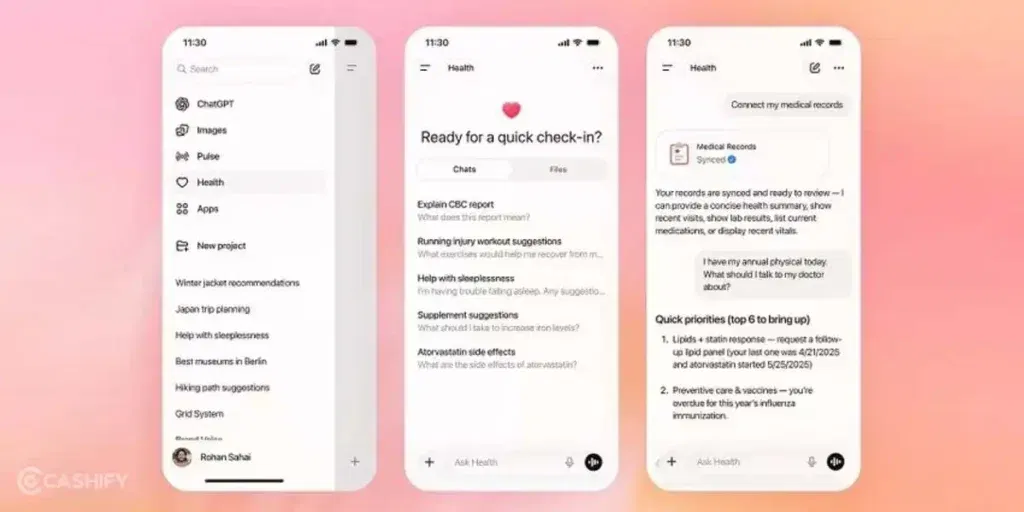
ChatGPT Health combines secure connections, AI intelligence, and privacy-first design to provide personalized support.
1. A Dedicated Health Space
Health exists in its own section of ChatGPT. Conversations, memories, connected apps, and files are stored separately from your other chats. While Health chats appear in your history for convenience, the data remains isolated and secure. This separation ensures Health information is never used in regular ChatGPT conversations.
2. Connecting Your Health Data
You can choose to connect medical records or wellness apps to make ChatGPT responses more relevant. Examples include:
- Medical records: Lab results, visit summaries, and clinical history from U.S.-based providers via b.well.
- Apple Health: Movement, sleep, activity, and wellness signals (iOS only).
- Wellness apps: Function, MyFitnessPal, Peloton, Weight Watchers, AllTrails, and Instacart for nutrition, workouts, hiking, and meal planning.
Furthermore, connected data allows ChatGPT to help you interpret lab results, prepare for appointments, track trends, and offer practical advice.
3. Privacy And Security
Your data is highly sensitive, so ChatGPT Health provides enhanced privacy measures:
- Health data is encrypted both in transit and at rest.
- Health conversations are not used to train AI models.
- You can control which apps have access and disconnect them anytime.
- Memories can be reviewed or deleted in settings.
- Multi-factor authentication adds an extra layer of account security.
What Are The Features Of ChatGPT Health?
Health offers several features that make it a powerful wellness tool:
- Personalized insights: Responses reflect your connected apps and medical records.
- Trend tracking: Monitor sleep, activity, nutrition, and other health metrics over time.
- Appointment preparation: Summarize key points or questions for your doctor.
- Lifestyle guidance: Get advice on diet, exercise, and wellness routines.
- Integration with popular apps: Connect Peloton, MyFitnessPal, or Apple Health for actionable insights.
- Custom instructions: Specify what ChatGPT should focus on or avoid in Health chats.
Who Can Access ChatGPT Health?
At launch, Health is available to a small group of early users to refine the experience. Eligible users include those on ChatGPT Free, Go, Plus, and Pro plans outside the European Economic Area, Switzerland, and the United Kingdom.
Some features, like medical records and Apple Health integrations, are currently available in the U.S. only. Additionally, Apple Health requires an iOS device, and medical records require a U.S.-based provider partnered with b.well.
Also Read: Upcoming Gaming Phones [2026] In India: Specs, Price & Launch Dates
How Health Supports, But Does Not Replace, Care
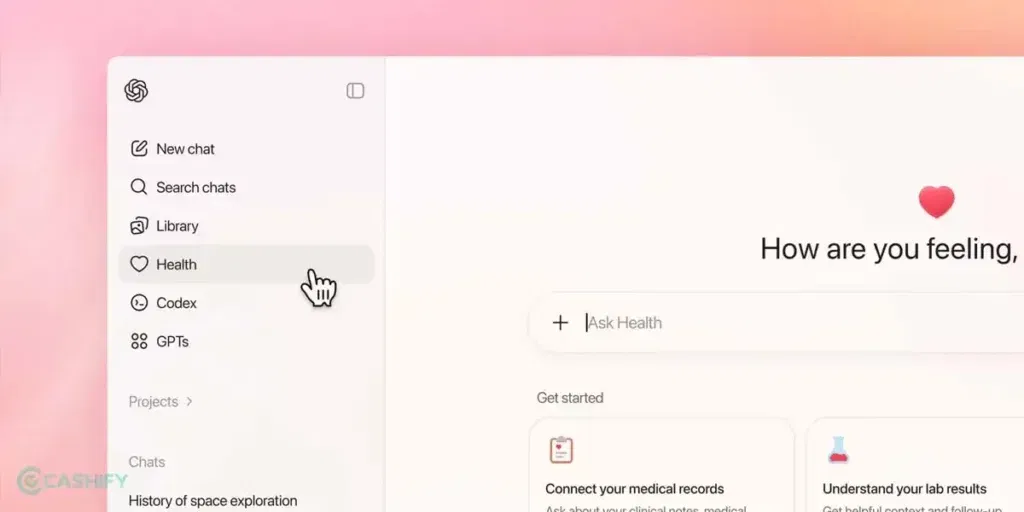
ChatGPT Health is supportive, not diagnostic. While it can help you track trends, interpret data, and prepare for appointments, it cannot replace your doctor.
Health is designed to:
- Clarify complex health information.
- Summarize lab results or visit notes.
- Explain wellness app data.
- Provide context for lifestyle or insurance decisions.
Practical Uses of ChatGPT Health
Here are some ways people can benefit from ChatGPT Health:
- Track lab results: Upload your blood tests to see trends in cholesterol, glucose, or vitamin levels.
- Prepare for appointments: Summarize key points and questions for your doctor.
- Manage fitness and nutrition: Use MyFitnessPal or Function for personalized meal and exercise advice.
- Plan activities: Integrate Peloton or AllTrails for workouts and outdoor activities.
- Understand insurance options: Get guidance based on your healthcare usage patterns.
Managing Health Data And Memory
ChatGPT Health offers strong controls for managing your data:
- Memory: Health-specific memory stays within Health and does not affect other chats.
- View & Delete: You can review or delete memories anytime in Health or Settings.
- Disconnect apps: Removing access deletes imported data for certain apps, such as medical records, without affecting other information.
- Privacy-first design: Health conversations, files, and memories are never used to train OpenAI models.
Why ChatGPT Health Matters?
Healthcare can be complex, with data scattered across devices, apps, and portals. That is why, ChatGPT Health addresses this by:
- Bringing AI intelligence together with your personal health data.
- Creating a secure, private space for health conversations.
- Helping you take a proactive role in managing your wellness.
- Providing support based on personalized insights, not generic advice.
Getting Started With ChatGPT Health
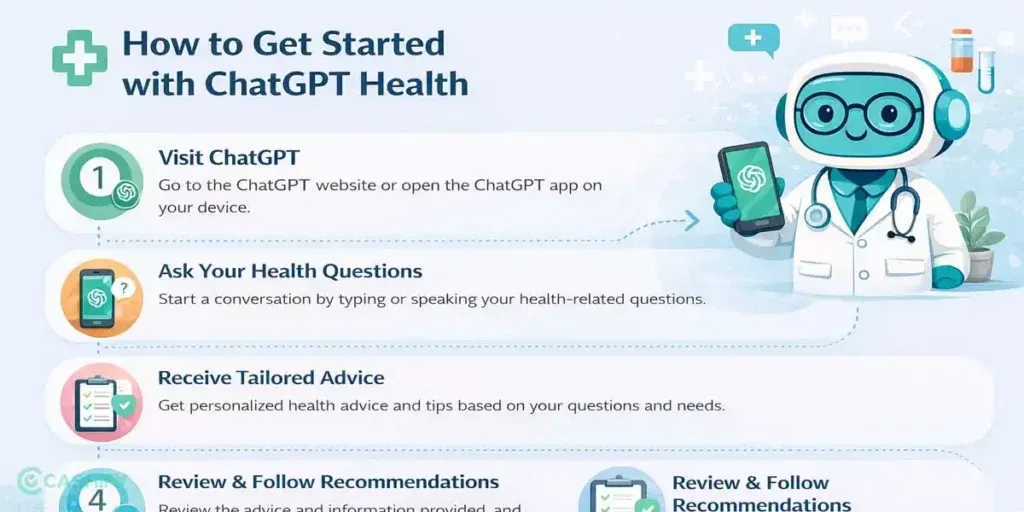
- Join the waitlist if Health isn’t available for you yet.
- Choose Health from the ChatGPT sidebar.
- Link medical records, Apple Health, or wellness apps.
- Ask questions, upload files, or request summaries of your records.
- Review or delete memories, disconnect apps, and control data sharing.
Final Thoughts
ChatGPT Health represents a major step forward in AI-powered personalized healthcare. Additionally, t combines advanced AI, connected health data, and strong privacy protections to help users feel informed and confident.
While it does not replace medical care, ChatGPT Health can clarify information, track wellness trends, and support proactive health management.
Also Read: Realme 16 Pro+ Vs OnePlus 15R: The Better Buy Under 50000?
Frequently Asked Questions
How to access ChatGPT Health?
To access ChatGPT Health, select “Health” from the ChatGPT sidebar. You can connect medical records, Apple Health, and supported wellness apps. At launch, access is limited to certain users outside Europe, Switzerland, and the UK, with more availability planned soon.
Is there any risk using ChatGPT?
Health is designed to support, not replace, medical care. While secure and private, AI responses may not be fully accurate. Users should not rely on it for diagnosis or treatment and should always consult healthcare professionals when needed.
Can ChatGPT Health replace my doctor?
No, Health is meant to support and guide you with personalized insights, trends, and wellness advice. Furthermore, it cannot diagnose, treat, or replace medical professionals. Always consult your doctor for medical decisions and treatment plans.
If you’ve just bought a new phone and don’t know what to do with your old phone, then here’s your answer. Sell old mobile to Cashify and get the best price for it. If you are planning to buy a new phone, check out Cashify’s refurbished mobile phones. You can get your favourite phone at almost half price with Six-month warranty, 15 days refund and free delivery.