

Healthcare today can feel complicated, slow, and fragmented. Your health data lives in different apps, portals, and reports. At the same time, paperwork, approvals, and compliance tasks overwhelm doctors, hospitals, and insurance teams. This is where artificial intelligence is starting to play a meaningful role. And two AI tools are leading this shift in very different ways: ChatGPT Health vs Claude for Healthcare.
At first glance, they may seem similar- both use advanced AI, both talk about healthcare, and both promise efficiency. But when you look closer, you realize that they serve very different users and solve very different problems.
In this blog, let us understand the differences between ChatGPT Health vs Claude for Healthcare.
Also Read: What Is ChatGPT Health? How AI Is Changing Healthcare Today
What Is ChatGPT Health?
ChatGPT Health puts you at the center. It provides a dedicated, health-focused experience within ChatGPT that helps you understand your health information and prepares you for meaningful conversations with healthcare professionals.
Instead of generic responses, ChatGPT Health can provide context-aware insights by using your own health data- but only if you choose to connect it.
You can use ChatGPT Health to:
- Understand lab results and visit summaries
- Track trends in sleep, activity, or nutrition
- Prepare questions before medical appointments
- Make sense of medical terminology
- Get lifestyle guidance tied to your data
ChatGPT Health does not diagnose conditions or replace medical care. Its role is to support you with clarity and preparation so you can participate more confidently in your healthcare decisions.
How ChatGPT Health Works?
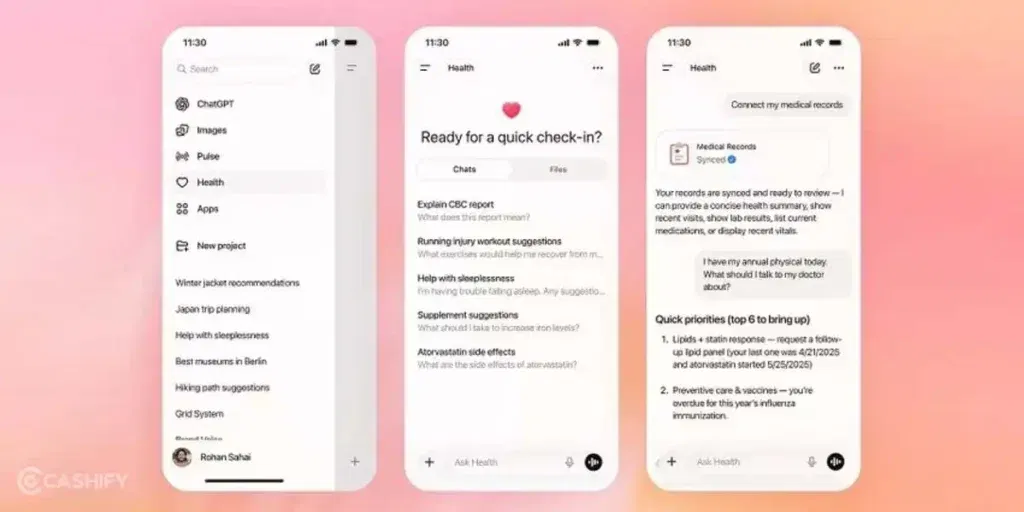
ChatGPT Health works by combining AI intelligence with secure, user-controlled health data connections.
First, Health exists in its own dedicated space within ChatGPT. This separation ensures that your health conversations, files, and memories stay isolated from your regular chats.
Second, you can choose to connect data sources such as:
- Medical records and lab reports
- Fitness and wellness apps
- Activity, sleep, and nutrition data
Once connected, ChatGPT Health:
- Summarizes complex medical information in plain language
- Identifies patterns and trends over time
- Provides personalized explanations instead of generic advice
- Helps you organize information before doctor visits
Privacy is built into every step. Your health data is encrypted, not used to train AI models, and fully under your control. You can review, delete, or disconnect data whenever you want.
Furthermore, ChatGPT Health works as a personal health interpreter, turning scattered information into something you can understand and use.
Let us now talk about Claude for Healthcare in our ChatGPT Health vs Claude for Healthcare comparison.
Also Read: 8 Creative Ways To Repurpose Your Old Phones And Make It Useful Again
What Is Claude For Healthcare?

Claude for Healthcare is built for the operational side of healthcare, not for individual wellness tracking.
It is designed to support healthcare organizations such as hospitals, payers, administrators, and startups by reducing the time and effort required to manage complex healthcare workflows.
Instead of focusing on personal health data, Claude works with:
- Coverage policies
- Clinical guidelines
- Coding systems
- Provider registries
- Research databases
Additionally, laude helps teams navigate healthcare’s administrative complexity more efficiently, allowing professionals to focus more on care and less on paperwork.
How Claude For Healthcare Works?
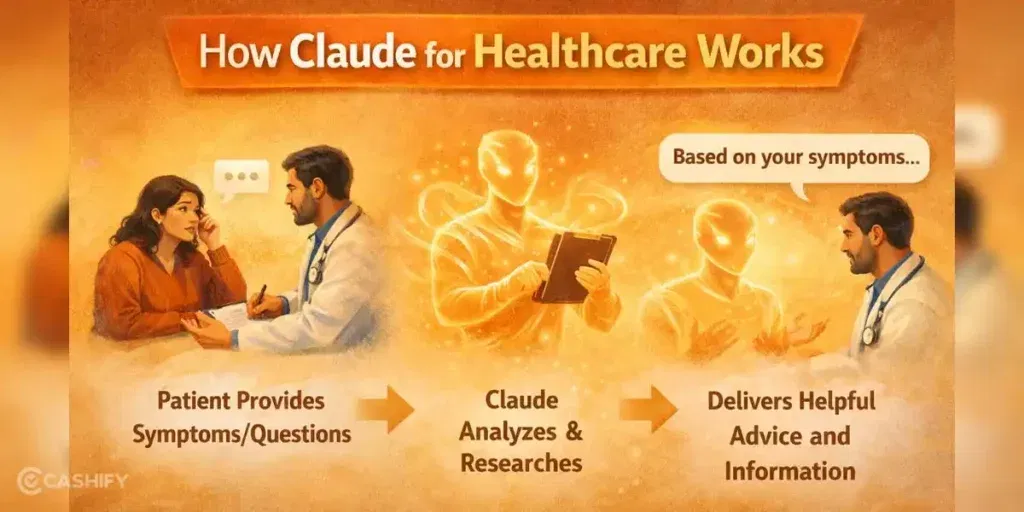
Claude for Healthcare works by directly connecting to industry-standard healthcare systems and databases.
Through secure connectors, Claude can access:
- Medicare coverage and reimbursement rules
- Diagnosis and procedure coding systems
- Provider identification and credentialing data
- Biomedical research and clinical literature
This allows Claude to pull accurate, up-to-date information without manual searching.
In practice, Claude can:
- Review prior authorization requests by cross-referencing coverage rules and clinical criteria
- Support claims and appeals by assembling relevant documentation
- Assist with medical coding and billing accuracy
- Help triage patient messages and coordinate care
- Support developers building healthcare products using modern data standards like FHIR
Claude does not make final decisions. Instead, it provides structured, well-supported outputs that healthcare professionals can review and approve.
Furthermore, you can think of Claude as an AI layer inside healthcare systems, quietly improving speed, accuracy, and coordination.
Also Read: Upcoming Gaming Phones [2026] In India: Specs, Price & Launch Dates
ChatGPT Health Vs Claude for Healthcare
Now that you understand what each tool is built for, the differences become much clearer.
ChatGPT Health works at the individual level, helping you make sense of your own health information. While Claude works at the system level, helping healthcare organizations manage complexity at scale.
Here’s a clear side-by-side between ChatGPT Health vs Claude for Healthcare.
| Category | ChatGPT Health | Claude for Healthcare |
| Primary Focus | Your personal health understanding | Healthcare operations and workflows |
| Main Users | Patients and individuals | Providers, payers, admins, startups |
| Core Purpose | Education, preparation, and insight | Efficiency, compliance, and scale |
| Health Data Usage | Personal medical and wellness data | Enterprise and clinical system data |
| Data Connections | Medical records, Apple Health, wellness apps | CMS data, ICD-10, NPI, PubMed |
| Privacy Model | User-controlled, private health space | HIPAA-ready enterprise environment |
| Medical Advice | Supportive, educational only | Decision-support for professionals |
| Prior Authorization | Explains the process | Reviews and cross-checks requests |
| Claims & Appeals | Helps you understand outcomes | Builds and processes appeals |
| Medical Coding | Not designed for billing | Supports coding and accuracy |
| Interoperability | Not system-focused | Supports FHIR and integrations |
| Tone | Plain, patient-friendly language | Structured and professional |
| Best Fit | Personal health clarity | Healthcare system efficiency |
Final Thoughts
ChatGPT Health vs Claude for Healthcare are not two versions of the same idea- they represent two sides of the healthcare ecosystem.
ChatGPT Health helps you understand your health and engage more confidently in care. Claude helps healthcare organizations function more smoothly behind the scenes.
The future of healthcare AI isn’t about choosing one tool over the other. It’s about using each tool where it makes the most sense- with humans always making the final decisions.
When used responsibly, both tools can make healthcare more understandable, more efficient, and ultimately more human.
Also Read: Realme 16 Pro+ Vs OnePlus 15R: The Better Buy Under 50000?
Frequently Asked Questions
Can ChatGPT Health replace a doctor or medical professional?
No. ChatGPT Health supports you without replacing medical care. It explains health information, summarizes records, and helps you prepare questions for appointments. Qualified healthcare professionals should always make diagnoses, treatments, and medical decisions.
Is it safe to share health data with ChatGPT Health?
Yes, ChatGPT Health is built with privacy in mind. Your health data is encrypted, stored separately, and not used to train AI models. You choose what to share, can review or delete memories, and can disconnect apps at any time.
Can individuals use Claude for Healthcare for personal health tracking?
Not typically. Claude for Healthcare is designed for healthcare organizations, not individual patients. It focuses on administrative workflows, clinical systems, and compliance tasks rather than personal wellness tracking or patient-facing health insights.
How does Claude for Healthcare help reduce administrative workload?
Claude automates time-consuming tasks like reviewing prior authorizations, supporting claims appeals, checking coverage requirements, and organizing clinical data. By pulling information from trusted healthcare databases, it reduces manual effort and speeds up decision-support processes.
Which tool should I choose if I work in healthcare but also manage my own health?
You don’t have to choose just one. ChatGPT Health can help you understand and manage your personal health, while Claude for Healthcare supports professional healthcare workflows. Each tool serves a different role and can be useful in different parts of your life.
If you’ve just bought a new phone and don’t know what to do with your old phone, then here’s your answer. Sell old mobile to Cashify and get the best price for it. If you are planning to buy a new phone, check out Cashify’s refurbished mobile phones. You can get your favourite phone at almost half price with Six-month warranty, 15 days refund and free delivery.